Application Follow Up: Master the application follow up to win more interviews
Sending an application follow up isn’t just a good idea—it’s a non-negotiable step in any modern job search. Think of it as the strategic message you send after hitting "submit" to turn digital silence into a real conversation. It’s what shows you’re proactive, organized, and genuinely invested in the role.
Why a Follow Up Is Your Secret Weapon in the Job Hunt
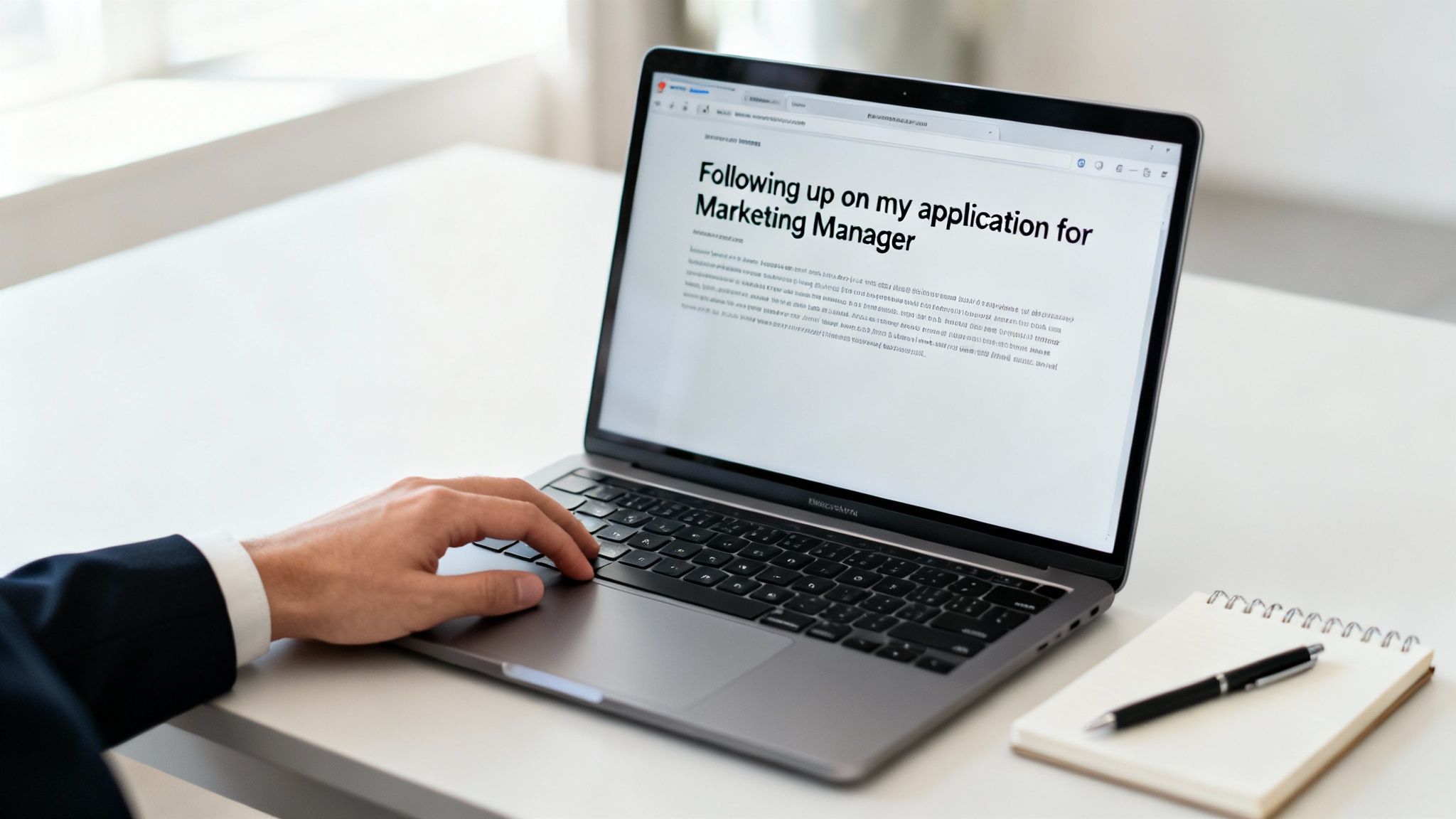
Let's be real: submitting a job application often feels like sending your resume into a black hole. You’re not wrong to feel that way. Most companies today rely on Applicant Tracking Systems (ATS) to sift through hundreds, sometimes thousands, of resumes for just one opening. Even the most qualified candidates can get screened out by an algorithm before a human ever sees their name.
This is where your follow-up email becomes your secret weapon. A simple, professional message can bypass that digital gatekeeper and land directly in a recruiter's inbox. It's more than just a nudge; a well-crafted message highlights key soft skills that a resume can’t always communicate.
Showcasing Your Professionalism and Interest
A thoughtful follow-up message proves you are:
- Proactive: You’re someone who takes initiative instead of just waiting around.
- Organized: It shows you're on top of your applications and know what's going on.
- Genuinely Invested: You’ve singled out this company and role, proving you’re not just spamming applications everywhere.
Hiring managers value these qualities immensely. It’s not about being pushy—it’s about using strategic communication to humanize your application. In a sea of anonymous digital files, you become a person, a candidate with a voice and clear enthusiasm for the opportunity.
The numbers don't lie. Ghosting plagues 61% of candidates who never hear back after applying. And what’s the biggest frustration for job seekers? A whopping 59% say it’s that very lack of communication. Proactive follow-ups are the best way to fight back against the silence.
Standing Out in a Crowded Market
Ultimately, following up is about making yourself memorable. When a recruiter is looking at two equally qualified candidates, who do you think gets the edge? It’s often the one who showed that extra bit of initiative and professional courtesy. That simple email can be the deciding factor that moves your application from the "maybe" pile straight to the "interview" list.
Of course, a powerful follow-up works best when it builds on a strong first impression. If you’re just getting started, learning how to prepare a professional application packet will maximize your chances from day one and set the stage for a confident, effective follow-up.
Nailing the Timing and Choosing Your Channel
When it comes to the follow-up, timing is everything. Jump the gun, and you look impatient. Wait too long, and you might find the opportunity has already sailed. It’s a delicate balance, but one you can totally master.
The professional sweet spot is 5-7 business days (think one to two weeks) after you hit "submit." This gives recruiters and hiring managers time to actually breathe and work through the first wave of applications. You have to remember their process involves getting past the ATS, a human review, and probably a few internal chats before they even think about picking up the phone.
Deciding on the Right Communication Channel
So, you’ve waited patiently. Now, how do you reach out? The right channel really depends on the company's vibe and what contact info you can dig up.
- Email: This is your go-to. It's the gold standard for a reason—it’s professional, lets you lay out your thoughts clearly, and leaves a paper trail.
- LinkedIn: Think of this as your strategic Plan B. It's more casual than an email, but a polite, quick check-in can work wonders, especially if you can find the exact recruiter on the case.
- Application Portal: If the company funnels everything through their portal, you have to play by their rules. Just be aware that your message might land in a general inbox.
Your main mission, should you choose to accept it, is to find the direct email of the hiring manager or recruiter. This gets your message straight to the right person, not lost in the
careers@abyss.
Finding the Right Person to Contact
Speaking of that abyss, sending your follow-up to a generic email address is better than nothing, but it's not going to make a splash. To really stand out, you need to find a name.
First, go back and read the job description carefully; sometimes a name or title is hidden in plain sight. No luck? Head over to LinkedIn. Search for the company and look for people with titles like "Talent Acquisition Specialist," "Recruiter," or the head of the department you’re trying to join (like "Director of Marketing").
For example, if you applied for a "UX Designer" role, try searching for the "UX Lead" or "Head of Design" at that company. A well-crafted connection request or a thoughtful InMail can put you on their radar. There’s a real art to this, and we break down the specific tactics in our guide on how to follow up with a recruiter.
By being smart about your timing and a little bit of a detective with your outreach, your follow-up transforms from a simple check-in to a powerful statement about your professionalism and genuine interest.
How to Write a Follow Up Email That Gets Opened
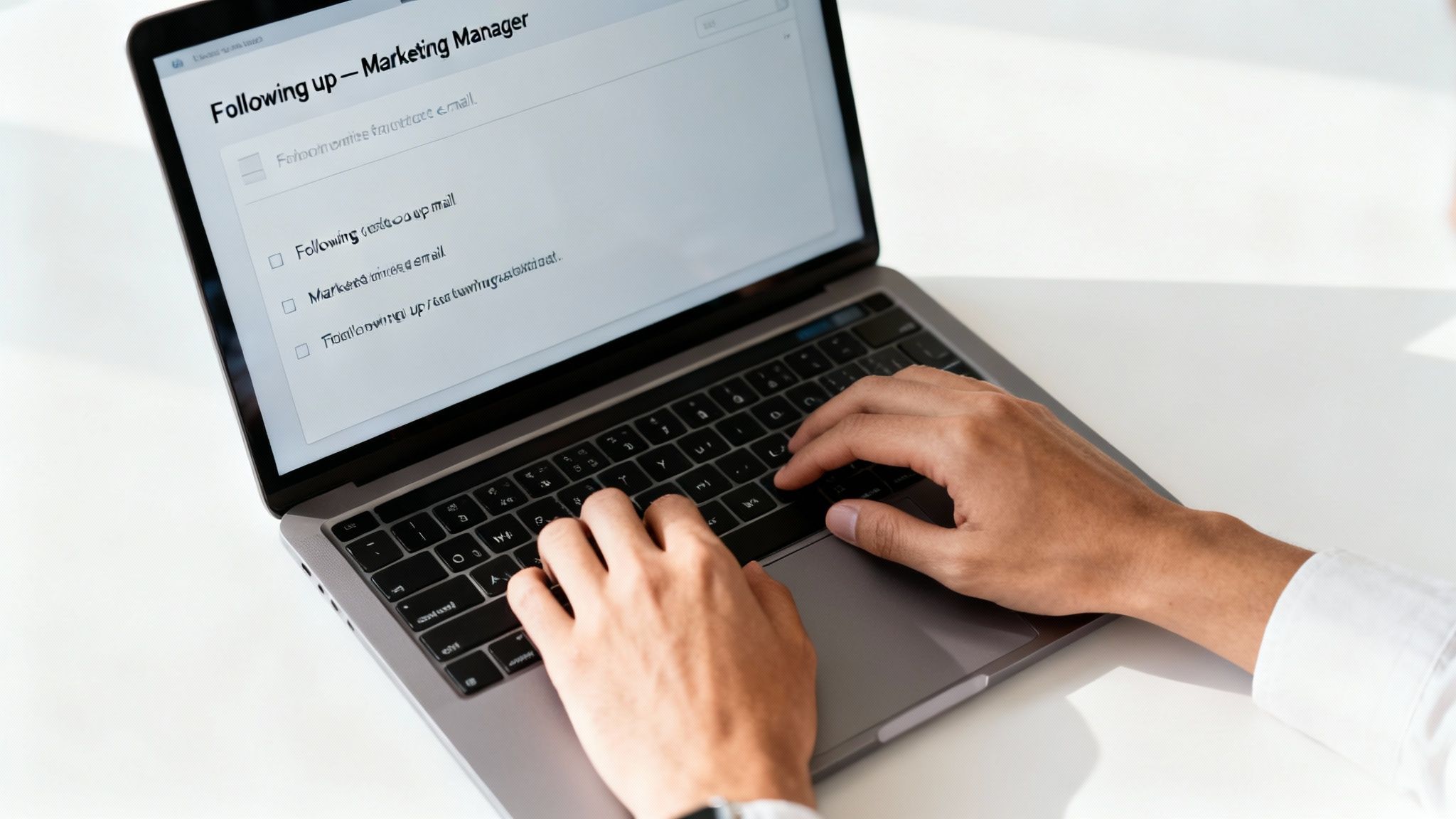
Your follow-up email is your shot at a second impression, so you have to make it count. The best ones are brief, professional, and sharp enough to cut through a chaotic inbox. Remember, you're not just bugging them for an update; you're adding a little more value and gently reminding them why you're a fantastic fit for the role.
It all starts with the subject line. Think of it as your email's headline—if it's confusing or generic, you're heading straight for the trash folder. Clarity is everything.
Crafting the Perfect Subject Line
Your subject line needs to be instantly recognizable and easy for a busy recruiter to find later. The formula is surprisingly simple: state your purpose and name the specific role. Ditch the clickbait and overly clever stuff. Professionalism always wins.
Here are a few battle-tested subject lines that work:
- Following up on my application for the Marketing Manager role
- Application Follow Up: [Your Name] for [Job Title]
- Checking in: [Job Title] Application
Each one is direct, professional, and tells the recipient exactly who you are and what you need. That little detail shows you respect their time, which is always a good move.
Building the Body of Your Email
Once you've got the subject line down, the body of the email needs to be just as concise and impactful. This isn't the time to rewrite your resume. Just focus on three things: a polite opening, a quick value-add, and a clear call to action.
Let's walk through what this looks like in a few common situations you'll definitely run into.
First Follow-Up After Applying
This is your first check-in, usually sent about a week after you hit "submit." The goal here is to gently bring your application back to the top of the pile and show you're still genuinely enthusiastic.
Here’s a solid example:
Dear [Hiring Manager Name],
I hope your week is going well. I’m writing to follow up on my application for the [Job Title] position that I submitted last [Day of the week, e.g., Tuesday]. My experience in [mention one key skill or achievement] really seems to align with the responsibilities you’ve outlined, and I'm very excited about the chance to contribute to [Company Name]'s mission.
I've attached my resume again for your convenience and would love the chance to discuss my qualifications further.
Best regards,
[Your Name]
This works because it’s short, reminds them of a specific qualification, and makes their next step super easy.
After a Mention of an Interview
It happens all the time. A recruiter mentions an interview is the next step… and then, radio silence. This follow-up is a little different because you're nudging a process that's already in motion.
Try this approach:
Hi [Recruiter Name],
It was great speaking with you last week about the [Job Title] role. I wanted to follow up on our conversation and reiterate my strong interest in moving forward to the interview stage.
Please let me know if there's any other information I can provide to help with scheduling. I remain very enthusiastic about the possibility of joining your team.
Thank you,
[Your Name]
This message is respectful of their timeline while clearly showing you're still in the game. Honestly, sometimes things just slip through the cracks, and a polite reminder is all it takes. For a few more options, our guide on the follow-up email after an application has some great additional examples.
When You Get No Response
Getting ghosted is disheartening, but one final, graceful inquiry can sometimes turn things around. This email should be your last attempt before you mentally move on, sent about two weeks after your first follow-up. If you want to dig deeper into handling the silence, check out The Ultimate Guide to a Follow Up Email No Response—it's a fantastic resource for maximizing your chances of getting a reply.
The Dos and Don’ts of Professional Follow Ups
Following up on a job application is a bit of an art form. You have to walk a fine line between showing you’re keen and becoming a nuisance. Get it right, and you reinforce why you’re a great candidate. Get it wrong, and you could land yourself in the “no” pile.
The golden rule? Respect the hiring manager’s time. Every message you send should be concise, professional, and add some kind of value. It's not just about asking, "So, any updates?" Each time you reach out, you’re giving them another glimpse into your communication skills and genuine enthusiasm.
Core Principles You Should Follow
To make sure your follow-ups are helping, not hurting, your chances, stick to these ground rules. They’re simple, but they’ll keep you looking professional and on-point.
- Keep it short and sweet. Your message should get the point across in 30 seconds or less. State your purpose, briefly mention your interest again, and sign off.
- Always stay positive. Even if the silence is driving you crazy, your tone needs to stay upbeat, professional, and courteous.
- Proofread like your job depends on it. Seriously. A single typo can completely undermine the professional image you're trying to build. A good trick is to read your message out loud to catch awkward phrasing or mistakes.
- Make their life easier. Don't make them guess. Always include the specific job title you applied for in both the subject line and the body of your email.
Following these basic guidelines ensures your message is well-received. For a deeper dive, check out our guide covering the best practices for email communication to really polish your approach.
Critical Mistakes to Avoid
Knowing what not to do is just as important. Some moves can immediately throw up red flags for a recruiter, torpedoing your chances before you even get a foot in the door.
Don’t send the same generic, copy-pasted message for every application follow up. Recruiters can spot a template from a mile away, and it communicates a lack of genuine interest in their specific role.
Here are the biggest blunders to steer clear of:
- Don't follow up every day. This is the fastest way to come across as desperate or just plain annoying. Give them space and respect the standard waiting periods.
- Don't let frustration show. Avoid demanding phrases like, "I was expecting to hear back by now." It’s unprofessional and definitely won't work in your favor.
- Don't bombard the whole company. Reaching out to multiple people at the same time just creates confusion and makes you look disorganized. Stick to a single point of contact, like the recruiter or hiring manager.
- Don't apologize for following up. You’re not being a bother. A polite, well-timed check-in is a standard part of being a professional. Own it.
How to Track and Systematize Your Follow-Up Strategy
When you're deep in a job hunt, juggling dozens of applications, it's easy to lose track. Which job did I apply to on Monday? Did I ever hear back from that recruiter? Trying to keep it all in your head is a surefire way to let a great opportunity slip through the cracks.
The secret isn’t a better memory; it’s a better system.
Creating a simple, visual way to track every application is what separates the organized, effective job seekers from the rest. It doesn't have to be complicated—you can build a powerhouse system with tools you probably already use, turning a chaotic process into a clear, actionable workflow.
Building Your Application Tracking System
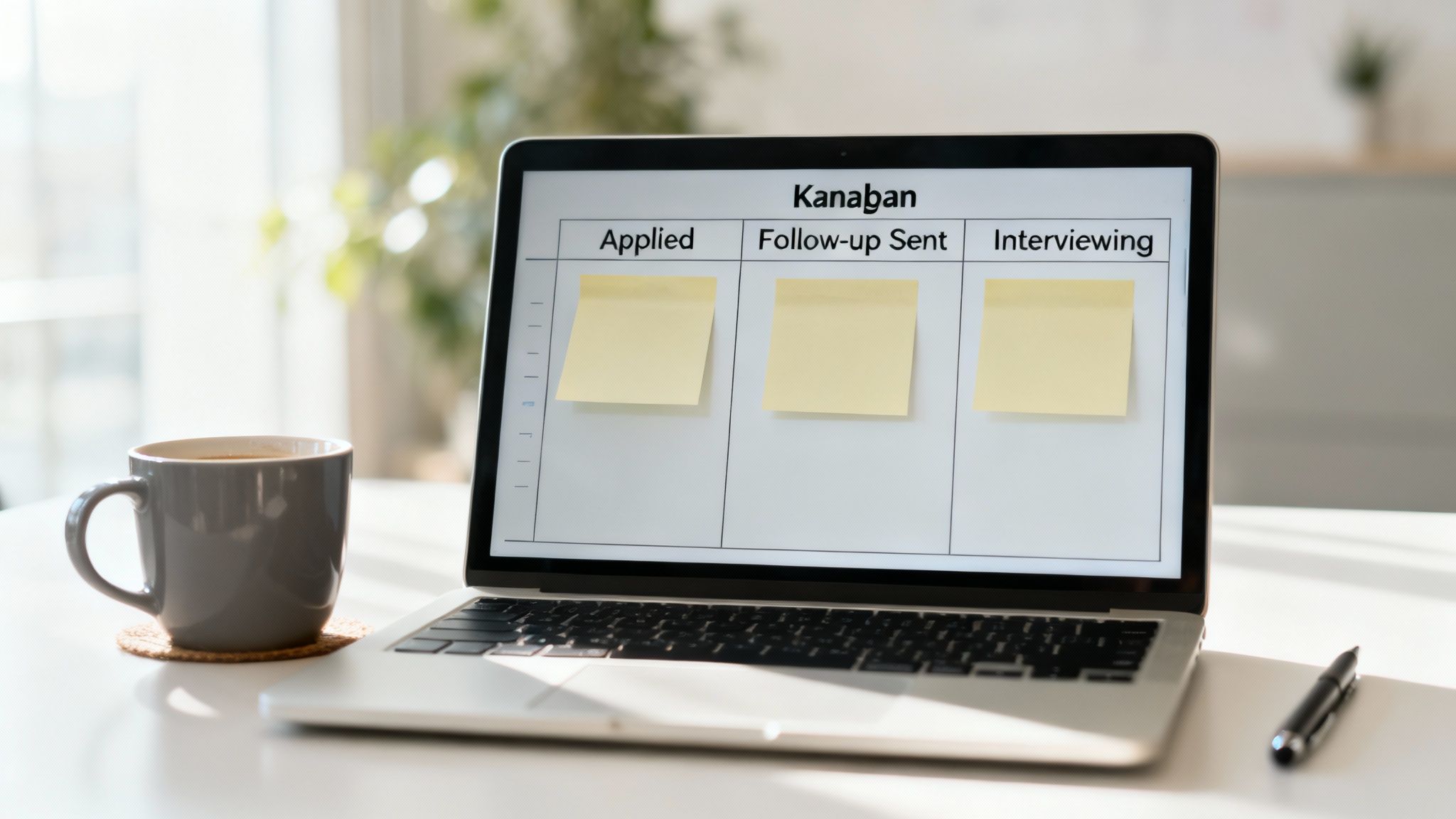
One of the best ways I’ve found to get a handle on everything is with a digital Kanban board. Think of it like a set of digital sticky notes you can move from one column to the next. This visual approach lets you see exactly where every single application stands at a glance.
A simple, effective board might look something like this:
- Wishlist: Cool jobs you've found but haven't applied to yet.
- Applied: Applications you’ve officially sent out into the world.
- Follow-Up Sent: For when you've nudged the recruiter or hiring manager.
- Interviewing: The exciting part! Any role that’s moved on to the next stage.
- Offer: The finish line.
This simple setup gives you a command center for your entire job search. For a more detailed walkthrough, our guide on job application tracking has more great strategies.
Setting Smart Reminders and Gathering Your Own Data
Once your board is set up, it’s time to make it work for you. Every time you move a card into the "Applied" column, immediately open your calendar and set a reminder for 5-7 business days out. This one small action automates your timing and guarantees you’ll never forget to check in.
But a great system does more than just remind you—it gives you priceless data. As you start tracking your follow-ups, you'll begin to spot patterns. Maybe you'll notice that emails sent on Tuesday mornings get way more replies than the ones you send on Friday afternoons. That's not a fluke; that's intel.
Let’s be real: the market is tough. The average job seeker sends out tons of applications, with cold submissions online seeing a success rate between a stark 0.1% to 2%. This is why a system is so crucial. We've seen professionals cut their job search time by as much as 30% just by getting organized and focusing their energy where it counts. You can see more job application trends and stats in this detailed report from HiringThing.
By tracking your efforts, you turn your job search into a series of small experiments. You can test different subject lines, tweak your follow-up templates, and play with send times to see what actually works. This data-driven approach helps you refine your strategy, zero in on the most promising leads, and—most importantly—keep your sanity while staying perfectly organized.
Frequently Asked Questions About Following Up
Even with a solid game plan, you're bound to run into some awkward situations when following up. Knowing how to handle these moments without second-guessing yourself is what separates the pros from the pack. Let's tackle some of the most common questions that trip job seekers up.
What If the Job Posting Says No Follow Ups
I get this one a lot. When a job description flat-out says "no follow-ups," the smartest thing you can do is listen. Seriously. Think of it as your first test—they want to see if you can follow simple directions. Bombarding them with messages anyway is a surefire way to get your application tossed.
Now, there's a small exception. Let's say it's been a while, maybe three to four weeks, and you see the job is still being advertised. In that very specific case, you could consider sending a single, incredibly polite email to a general HR inbox. Acknowledge their policy upfront, then briefly restate your interest. It might go nowhere, but if done with respect, it shows initiative without being annoying.
When a posting says "no follow-ups," respecting that shows you're a professional who can follow directions. The only exception is if weeks have passed and the role is still open—and even then, tread very, very lightly.
How Long Should I Wait Before a Second Follow Up
Patience is your best friend here. After you send that first follow-up (about a week after applying), you need to cool your jets for at least another one to two weeks before even thinking about round two. And honestly, a second follow-up should be a rare move, saved only for those roles you're truly fired up about.
If you do send another one, keep it even shorter than the first. You're just giving them a gentle nudge to bring your name to the top of the pile. After that? It's time to move on. Pushing any harder will do more harm than good.
Is It Okay to Follow Up on LinkedIn
Email is still the undisputed champ for formal follow-ups. It's professional, expected, and keeps everything documented. But that doesn’t mean you should ignore LinkedIn—you just have to be strategic about it.
Instead of sliding into a recruiter's DMs with a full-blown follow-up message, try a softer approach. Find the hiring manager or recruiter for the role and send a connection request with a short, personalized note.
Something simple like this works wonders:
- "Hi [Recruiter Name], I recently applied for the [Job Title] role and was really impressed by [Company]'s work in [mention something specific]. Would be great to connect."
This is way less intrusive. It opens the door for a conversation without putting them on the spot. If they accept your request and engage, then you can take the conversation from there. But don't just dump your follow-up pitch in their inbox unprompted.
Tired of juggling spreadsheets and sticky notes just to keep your job search straight? Eztrackr pulls everything into one simple, visual dashboard so you can focus on what really matters: landing the job. Track applications, automate your follow-up reminders, and get AI-powered tools to give you an edge. Over 45,000 job seekers are already using it to get organized and get hired. See how Eztrackr can streamline your job hunt today.