How to write a good cover letter: Proven steps to land more interviews
A great cover letter does more than just rehash your resume—it tells a story. It’s where you connect your skills and drive directly to a specific role, transforming a generic application into a memorable pitch for a hiring manager. To get it right, you need to personalize your message, quantify your wins, and show some genuine excitement.
Why Your Cover Letter Is More Important Than Ever
Let's get one thing straight: the cover letter is far from dead. In a world of automated job applications and cookie-cutter resumes, a well-crafted cover letter is your best shot at making a real, human connection. It's the one place you can move beyond a list of job duties and start a real conversation.
Think about it this way: your resume is the "what" and "where" of your career. It's the facts. Your cover letter, on the other hand, gets to the "why" and "how." It answers the questions a resume can't possibly touch:
- Why are you actually interested in working for this company?
- How do your past accomplishments solve the exact problems they’ve outlined in the job description?
- What are you like as a person, and how would you vibe with the team?
Hiring managers lean on cover letters to get a feel for your communication skills, attention to detail, and whether you're genuinely invested. A copy-pasted letter screams a lack of effort, but a tailored one proves you've done your homework.
The Numbers Don't Lie
Still not convinced? The stats are pretty eye-opening. A surprising 83% of hiring managers admit they read cover letters, even when they're optional. On top of that, 45% of them read it before they even look at your resume. That flips the old advice on its head, proving cover letters are now a crucial first impression.
Candidates who take the time to customize their letters are 1.9 times more likely to score an interview. Meanwhile, a staggering 81% of recruiters say they've rejected applicants because their cover letters were obviously generic.
This infographic paints a pretty clear picture of how much a great cover letter can stack the odds in your favor.
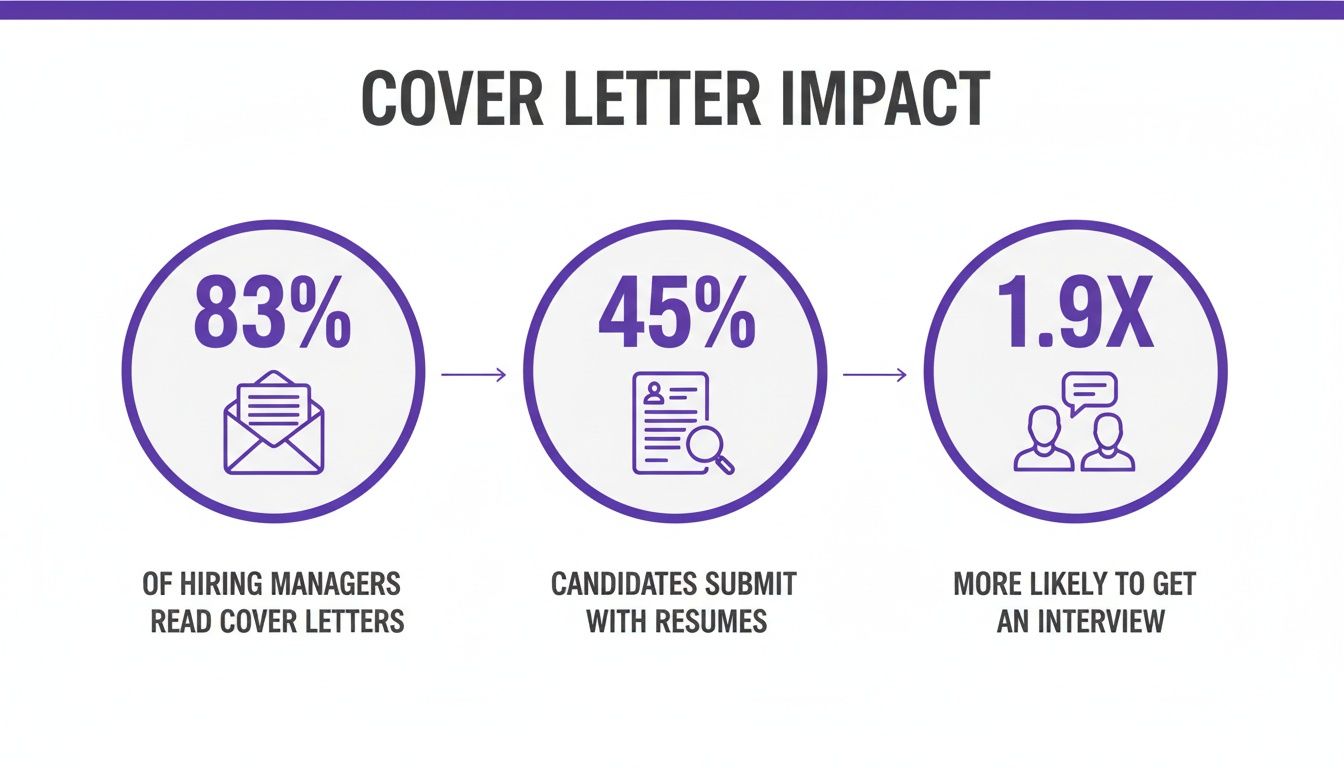
The takeaway is simple: most candidates skip this step, but nearly all recruiters depend on it to make their decision.
A cover letter gives you control of the narrative. You get to frame your biggest achievements and link them directly to what the company needs, making sure the hiring manager sees your most relevant skills first.
In super-competitive fields, that kind of strategic thinking is non-negotiable. Take a look at the intense Red Bull Racing recruitment process, for example. It shows just how high the standards are for every piece of your application. Your cover letter is the very first test.
Laying the Groundwork Before You Write
A truly great cover letter doesn't just appear out of thin air. It's built on a foundation of smart, targeted research. Before you even think about writing that first sentence, putting in the time to really understand the company and the role is the single most important thing you can do. This isn't about a quick skim of their homepage; it's about digging deep for insights that prove you’re a serious contender.
Think of yourself as a detective on a mission. Your job is to uncover specific details you can weave into your letter, turning a generic application into a direct, personalized pitch. I know it feels like an extra step, but trust me, this is what separates the candidates who get interviews from those who get ignored.
Deconstruct the Job Description
The job description is your treasure map. Don't just read it—dissect it. I like to print it out or copy it into a document and go to town with a highlighter. You're looking for keywords, specific skills, and the themes that keep popping up. Ask yourself: what problem is this company trying to solve by hiring for this position?
- Pinpoint Core Responsibilities: What are the top 3-5 duties they list? These need to be your main talking points.
- Separate Must-Haves from Nice-to-Haves: Note the qualifications they list as "required" versus "preferred." Your letter needs to hammer home that you meet the absolute essentials.
- Get a Feel for the Tone: Is the language buttoned-up and corporate, or is it casual and energetic? This is a huge clue about their culture and how you should frame your writing.
If you want to get really granular with this, you can learn more about how to ensure a high resume and job description match, a critical skill at this stage. This prep work ensures your cover letter speaks their language.
Investigate the Company Beyond the Surface
Once you know what they want, it's time to figure out who they are. This is where you find those golden nuggets of information that will make your letter stand out from the pile.
A company's social media, especially LinkedIn, is a fantastic place to start. It gives you a real-time feed of their latest news, projects, challenges, and overall vibe.
For instance, a quick scroll through a company’s LinkedIn feed might show you a recent product launch or a big community initiative they're proud of.
A post like this tells you exactly what the company is excited about right now—in this case, innovation and specific tech. It's the perfect opening to connect your own experience to their current goals.
The point isn't just to flatter them by name-dropping their latest project. It's about drawing a clear line from a specific company achievement, value, or challenge to a specific skill or experience you bring to the table.
Find the Hiring Manager
The final piece of the puzzle is figuring out who you're actually talking to. Addressing your letter to a specific person is infinitely more powerful than the generic—and frankly, outdated—"To Whom It May Concern."
Start your search on LinkedIn. Look for titles like "Hiring Manager," "[Department] Manager," or "Head of [Team]." If the job description happens to mention who the role reports to, you've hit the jackpot.
If you come up empty-handed after a good search, don't just give up and go generic. Addressing it to the "Marketing Hiring Team" or the "[Department Name] Search Committee" is a solid plan B. It still shows you put in the effort.
Anatomy of a Compelling Cover Letter
Alright, you've done the digging. Now it's time to build the actual letter. A truly great cover letter isn't just a wall of text; it's a strategic story with three acts: a killer opening, a persuasive body, and a confident closing. Each part has a job to do, moving the hiring manager from "who's this?" to "we need to talk to them."
Forget those stuffy, generic templates you see everywhere. The goal here is to create something that feels genuine, energetic, and laser-focused on what the company actually needs. Let's break down how to nail each piece.

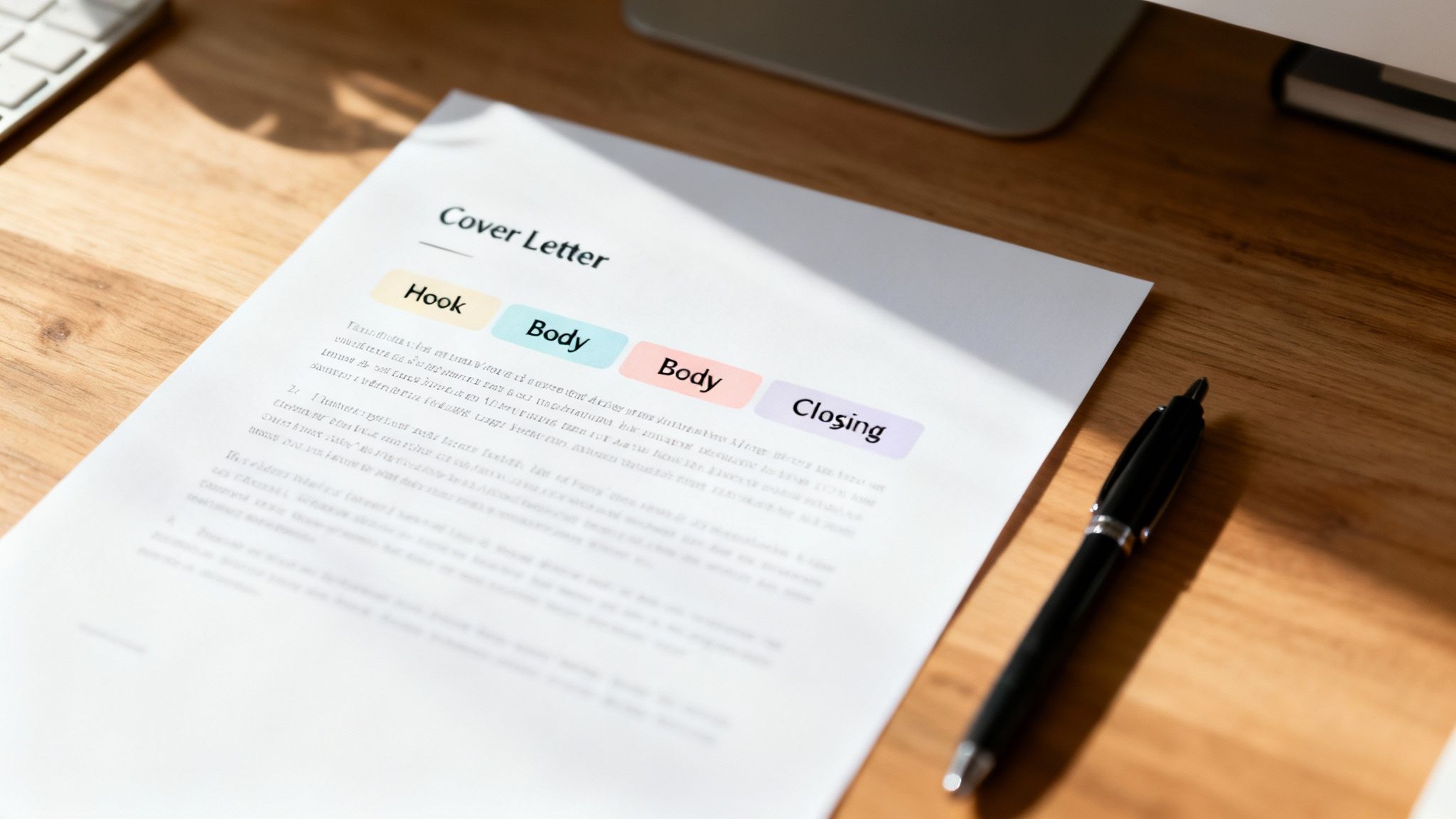
To keep things simple, here’s a quick overview of how the three parts work together.
Cover Letter Structure At a Glance
This table breaks down the main goal for each section of your cover letter and what you should include.
| Section | Primary Goal | Key Elements to Include |
|---|---|---|
| Opening Hook | Grab the reader's attention immediately and show your unique value. | A powerful achievement, a referral, a genuine connection to the company's mission. |
| Body Paragraphs | Prove your skills with concrete evidence and storytelling. | 2-3 specific examples of your accomplishments using the STAR method. |
| Closing / CTA | End on a confident, proactive note and prompt the next step. | A brief summary of your value and a clear, polite call to action (CTA). |
Think of it as a roadmap: hook them, prove your worth, and then tell them what's next.
Crafting an Unforgettable Opening Hook
You get about seven seconds. That’s the average time a recruiter spends on an initial scan. The classic "I am writing to express my interest…" is the fastest way to get your application tossed aside. You need a hook that makes them stop scrolling.
Here are a few ways to do it:
- Lead with a Big Win: Start with your most impressive, relevant result. Slap a number on it.
- Show You're a Fan: Mention a specific company project or recent news that genuinely caught your eye and connect it to your own ambitions.
- Drop a Name: If you were referred by someone, put their name right at the top. It creates an instant connection.
- Connect on Values: If the company’s mission clicks with you, say so. Explain why their focus on sustainability, for example, matters to you.
The best opening lines answer the recruiter's unspoken question: "Why should I care?" Show them you're not just another applicant—you're a solution.
Let’s say you’re applying for a Marketing Manager role at a green tech company.
The Generic Opener:
"I am writing to apply for the Marketing Manager position I saw advertised on LinkedIn." (Yawn.)
The Compelling Hook:
"When I saw the recent Fast Company feature on your new solar-powered charging technology, it solidified my belief that [Company Name] is leading the charge in sustainable innovation—a mission I've championed throughout my career, most recently by leading a campaign that grew our eco-friendly product line by 35%."
See the difference? The second one is bursting with passion, relevant experience, and a hard number. It demands to be read.
Building a Persuasive Body
This is where you connect your experience directly to the company's pain points. Don't just list your job duties—that’s what your resume is for. Your goal here is to tell short, powerful stories that prove you can do the job.
The absolute best way to frame these stories is with the STAR method. It turns a vague claim into a memorable piece of evidence.
- Situation: Set the scene. What was the challenge?
- Task: What was your specific goal?
- Action: What, exactly, did you do? Use strong verbs.
- Result: What happened? Quantify it. Give them numbers.
Let's say the job description is all about "improving user engagement." Here's how you can frame your story:
At my last SaaS company (Situation), we were staring down a 20% drop in user engagement on our main dashboard. My job was to figure out why and fix it (Task). I dug into user surveys, analyzed heatmaps, and worked with the UX team to redesign the entire navigation flow, personally leading the A/B testing (Action). Three months later, the new dashboard had boosted user engagement by 45% and cut navigation-related support tickets in half (Result).
That’s so much better than just saying, "I have experience with user engagement." It shows them how you think and proves you get results. Aim for two or three of these STAR stories that hit the most important requirements from the job description.
If you find it tough to get these stories structured right, a smart tool can be a huge help. For example, using a job cover letter generator can give you a solid framework to start with, which you can then polish with your unique accomplishments.
Delivering a Confident Closing and Call to Action
Your final paragraph needs to stick the landing. It should feel confident and proactive. A weak closing like, "I look forward to hearing from you," is passive and puts the ball entirely in their court.
A strong closing needs two things:
- A Quick Summary: Briefly restate your excitement and your confidence that you can help them win.
- A Clear Call to Action (CTA): Propose what happens next. It shows you’re serious and ready to go.
Here’s what that looks like in the real world:
The Weak Closing:
"Thank you for your time and consideration. I have attached my resume and hope to hear from you soon."
The Confident Closing:
"I am incredibly excited about the possibility of bringing my experience in user-centric design to your team and contributing to your mission of making technology more accessible. I am available for a call next week and would welcome the chance to discuss how my skills can help [Company Name] hit its Q4 goals."
This is proactive, specific, and all about their success. It’s the perfect final touch to a letter that’s built to get you that interview.
Avoiding the Mistakes That Get You Rejected
You've done the hard work. You researched the company, dug into the role, and framed your accomplishments perfectly. The last thing you want is for a simple, avoidable mistake to torpedo your entire application.
This is all about the final polish—eliminating any tiny detail that gives a recruiter a reason to pause. It’s easy to think the content is all that matters, but how you present it says a lot about your professionalism and attention to detail.
Let's walk through the critical mistakes that trip up even the best candidates.
The Goldilocks Rule: Keep It Just Right
When it comes to cover letter length, less is almost always more. Hiring managers are drowning in applications, and a massive wall of text is an invitation to skim, not read. Your job is to be concise, impactful, and respectful of their time.
The data backs this up. While most job seekers know a cover letter is important, a whopping 66% agree that half a page (or less) is the sweet spot. With many hiring managers spending under 30 seconds on a letter, you have a tiny window to make your case.
Think of your cover letter as the trailer, not the full movie. It should tease the most exciting parts of your career story and make them eager to schedule an interview to learn more.
Aim for 250-400 words, broken into three or four short paragraphs. That's just enough space to hook them, highlight your top two or three wins, and close with a confident call to action.
Unforgivable Errors That Show a Lack of Care
Some mistakes are so glaring they can get you rejected on the spot. These are the absolute non-negotiables—the things you need to triple-check before you even think about hitting "send."
- Typos and Grammatical Errors: This is the #1 application killer. Even a single typo screams "lack of attention to detail." Read your letter out loud, have a friend look it over, and use a grammar checker as a final backup.
- The Dreaded Generic Greeting: "To Whom It May Concern" is a red flag that you didn't do your homework. As we covered, find the hiring manager's name. If you can't, use a specific title like "Dear [Department] Hiring Manager."
- Regurgitating Your Resume: Your cover letter and resume are a team, not twins. The letter shouldn't just be your resume's bullet points written in paragraph form. It's your chance to add context, personality, and the story behind the achievements.
These errors aren't just small slip-ups; they reflect on your professionalism. For more on keeping your tone right, check out these professional email writing tips.
Formatting and Readability Are Not Optional
How your letter looks is just as important as what it says. If it's a cluttered, hard-to-read mess, you can bet a busy recruiter will just move on to the next one. Clean, professional formatting is your best friend.
Here's a quick checklist to follow:
- Choose a Professional Font: Stick to the classics: Calibri, Arial, Garamond, or Times New Roman. Keep the size between 10 and 12 points.
- Use White Space: Break up your text with short paragraphs. Don't be afraid of generous margins. This makes the page feel less intimidating and way easier to scan.
- Ensure Consistent Formatting: Make sure the header on your cover letter (with your name and contact info) matches the one on your resume. It creates a cohesive, branded package.
Ultimately, writing a great cover letter is as much about avoiding the pitfalls as it is about showcasing your strengths. By keeping it concise, personal, and flawless in its presentation, you clear the way for your qualifications to shine.
Your Final Pre-Submission Checklist
You’ve poured time and effort into your research, storytelling, and crafting the perfect message. Now for the moment of truth before you hit "apply"—the final quality check. I've seen countless great candidates stumble at this last hurdle, and it's a shame because it's so avoidable. This checklist is your safety net, here to catch any last-minute slip-ups and give you the confidence that your cover letter is truly ready to go.
Before anything else, proofread your document one more time, but do it differently. Seriously, read it out loud. It might feel a little weird, but this trick forces your brain to slow down and process each word, making it way easier to catch awkward phrasing, typos, and grammar mistakes that your eyes would otherwise just glide over.
The Content and Tone Review
With the typos squashed, it's time for a gut check on the substance. The goal here is to make sure your letter isn't just error-free, but that it strategically hits all the right notes for this specific role and company.
Run through these final checkpoints:
- Is the Hiring Manager's Name Right? You’d be surprised how often this gets botched. Double-check the spelling of their first and last name, and make sure their title is current.
- Are Your Achievements Backed by Numbers? Glance back at your key accomplishments. Did you use numbers, percentages, or dollar amounts to show real impact? "Increased efficiency" is just fluff; "increased team efficiency by 15%" is a fact.
- Does Your Tone Vibe with Theirs? Pull up the job description and the company’s recent social media posts again. Does the tone of your letter—whether it’s formal, conversational, or bursting with energy—match their company culture?
- Is the Call to Action Clear? Your closing paragraph needs to confidently propose what comes next. Ditch passive phrases like "I hope to hear from you." Be direct and proactive.
Your final review is so much more than a spell-check. It’s a strategic confirmation that every sentence serves a purpose, connects to the employer's needs, and reflects you at your most professional.
The Final Technical Polish
The small stuff—like formatting and file names—signals that you’re organized and have an eye for detail. Don't let a sloppy file name or a wonky layout undermine your fantastic message. These last steps are quick, but they’re absolutely essential.
This is where a good system comes in handy. A job application tracker like Eztrackr helps you keep all your documents organized for each application, so the right file is always at your fingertips.
Getting organized like this is how you avoid accidentally sending a cover letter for Company A to Company B—a mistake that happens way more than you'd think. Having a dedicated system helps maintain that crucial final polish, especially when you're juggling dozens of applications. For more on creating a seamless application package, check out our guide on resume formatting guidelines, which pairs perfectly with these tips.
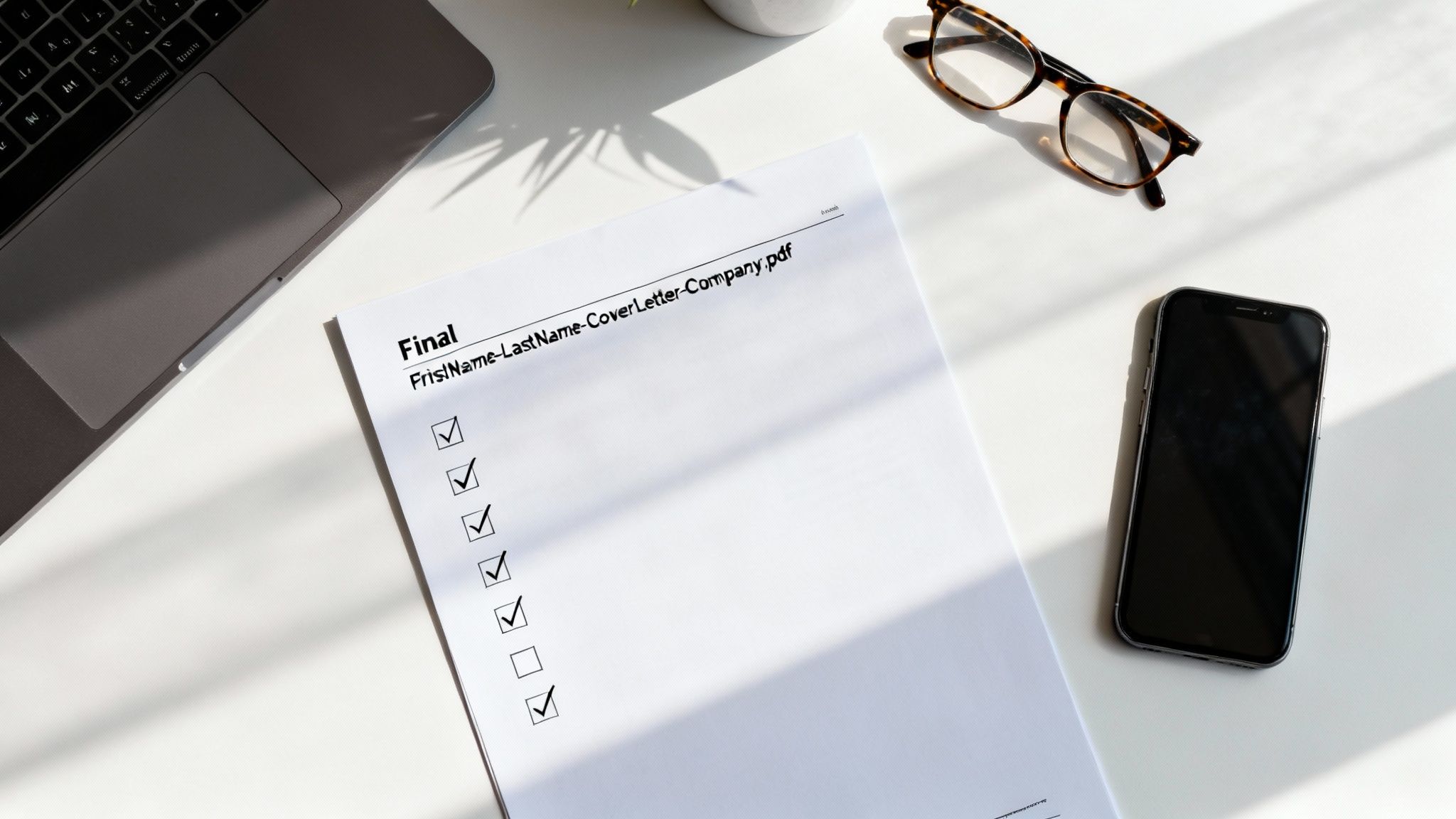
Finally, always save your document as a PDF. This locks in the formatting, so it looks perfect on any device. And please, use a professional, clear file naming convention.
File Name Format: FirstName-LastName-CoverLetter-CompanyName.pdf
Example: Jane-Doe-CoverLetter-AcmeCorp.pdf
This simple format makes it dead simple for the recruiter to find and manage your document. Once you’ve ticked every box on this list, take a deep breath and hit send with total confidence. You've got this.
Common Cover Letter Questions Answered
Even when you feel like you've got everything covered, a few nagging questions always seem to pop up right before you hit "submit." It's completely normal. Let's tackle some of the most common tricky situations I see job seekers wrestle with so you can finalize your cover letter with confidence.
Think of this as your go-to guide for those last-minute hurdles.
How Do I Write a Cover Letter with Little Experience?
When you don't have a long list of previous jobs, your cover letter's job changes. It's less about past roles and more about future potential. This is your chance to pivot and let your transferable skills and raw enthusiasm do the talking.
Instead of focusing on what you haven't done, spotlight what you have done:
- Academic Projects: Did you lead a team project that mirrors the kind of work you'd do in this role? Talk about it. Detail how you solved a problem or collaborated to get it done.
- Volunteer Work: Volunteering is experience. Period. Explain how it shows you're responsible, empathetic, or skilled in areas like event planning or community outreach.
- Leadership Roles: Any involvement in clubs, sports, or community groups is fair game. Use it to prove you can communicate, work with a team, and take initiative.
The goal here is to show genuine excitement for the company's mission and the role itself. A passionate, well-researched letter from an eager candidate can absolutely beat one from a more experienced but less engaged applicant.
Are AI Cover Letter Generators a Good Idea?
AI tools can be a lifesaver, especially when you're staring at a blank page. They're great for breaking through writer's block or getting a basic structure down. But that's where their usefulness ends. They should be your starting point, not the finished product.
Once the AI has done its part, your work begins. You have to get in there and heavily personalize the output.
Recruiters can spot generic, AI-written text from a mile away. Your job is to inject your unique voice, add specific stories with quantified results, and tweak the language to match the company's culture. Think of AI as your assistant, not the author.
What if I Cannot Find the Hiring Manager's Name?
You've done your homework. You've scoured LinkedIn, combed through the company's "About Us" page, and still… nothing. It happens. The absolute worst thing you can do is give up and use the hopelessly outdated "To Whom It May Concern."
Instead, aim for a professional and targeted alternative. This shows you made an effort.
Consider options like:
- Dear [Department Name] Hiring Team
- Dear [Job Title] Search Committee
- Dear Head of [Relevant Department]
Any of these are a massive improvement over a generic greeting and subtly show your resourcefulness.
Should My Cover Letter and Resume Have the Same Design?
Yes, 100%. This is one of the easiest wins in your job application.
Using the same header, fonts, and general formatting across both documents creates a cohesive, professional package. It makes your personal brand look polished and intentional. To a recruiter sifting through dozens of applications, that visual consistency signals that you're detail-oriented before they've even read a single word.
Feeling overwhelmed by the details of every application? Eztrackr helps you manage your job hunt effortlessly. Our AI-powered tools, including a cover letter generator and resume analyzer, help you create personalized, high-impact materials for every role. Organize your applications on an intuitive kanban board and track your progress with insightful statistics, so you can focus on what matters most—acing the interview. Join over 45,000 job seekers and start landing more interviews today at https://eztrackr.app.