How Many Jobs Should I Apply To for Real Results
Everyone wants a magic number. The perfect, one-size-fits-all answer to "How many jobs should I apply to?"
If you're looking for that simple answer, here it is: aim for 10 to 20 high-quality, targeted applications per week. This range strikes the right balance, allowing you to create truly personalized resumes and cover letters for roles where you're a great fit. It’s all about maximizing your chances of getting noticed, not just racking up submissions.
The Real Number of Job Applications You Need

Figuring out your weekly application goal can feel like a total guessing game. But the truth is, there is no magic number—it's all about strategy. Your first instinct might be to cast the widest net possible, but today's hiring world rewards precision, not just volume.
Think about it like this: are you using a scattergun or a sniper rifle? The goal is to make every single shot count.
This shift in thinking is absolutely critical because the competition is fierce. In this hyper-competitive market, the average job seeker has to send out around 32 applications just to land 4 interviews. For popular entry-level gigs, that number can explode to 150-200+ applications for a measly 3-5% interview rate. You can dig deeper into these numbers over at The Interview Guys.
Adopting a Strategic Mindset
Instead of obsessing over a quota, you need to focus on a strategic application process. This means ditching the old "spray and pray" method and actually investing time to personalize each submission. A quality-first approach pays off in a few huge ways:
- You'll beat the robots. Tailoring your resume with keywords straight from the job description is how you get past the dreaded Applicant Tracking Systems (ATS).
- You'll grab a human's attention. A personalized application screams "I'm genuinely interested!" and makes you stand out from the hundreds of generic CVs a recruiter sees daily.
- You'll avoid burnout. Getting ghosted after sending out dozens of low-effort applications is soul-crushing. Seeing higher response rates from quality submissions is what keeps you motivated and in the game.
The core idea is simple: A handful of well-crafted applications sent to perfectly matched roles will always outperform a hundred generic ones sent into the void. This mindset is the foundation of an effective and sustainable job search.
Once you really get this, you can build a smarter plan that sidesteps frustration and gets you in front of real hiring managers. This is absolutely essential, especially when you realize the average job search length can stretch on for months. Making every application count is the single best way to shorten that timeline.
Why Quality Applications Always Beat Quantity

When you're trying to figure out "how many jobs should I apply to," it’s easy to think the answer is "as many as possible." But that volume-first approach—what I call the "spray and pray" method—usually backfires. Sending out 100 generic resumes is like casting a massive net into the ocean. Sure, you might catch something, but you'll mostly end up with seaweed and old boots, while the real prize fish swim right on by.
A quality-focused approach, on the other hand, is like being a skilled angler. You study the water, pick the right bait for the specific fish you’re after, and cast your line exactly where it needs to go. That kind of strategy is what actually lands you the big one.
Navigating the Digital Gatekeepers
These days, the first gatekeeper you have to get past isn't even a person. It's a piece of software. Most companies rely on an Applicant Tracking System (ATS) to sift through the mountain of applications they get for every open role. These systems are programmed to scan resumes for specific keywords and qualifications that match the job description.
A generic, one-size-fits-all resume almost never has the exact language the ATS is looking for. Because of this, a staggering 75% of resumes get tossed into the digital trash can before a human ever lays eyes on them. It’s no longer a bonus to personalize your application; it’s the only way to even get in the door. For a deeper look at this, check out our guide on how to get a better resume and job description match.
This means even the most qualified person for the job can be completely invisible if their application isn't tailored. Taking a little extra time upfront to customize your resume ensures you’re speaking the right language to both the software and the hiring manager who (hopefully) reads it next.
A quality application does more than just list your skills; it tells a compelling story about why you are the perfect solution to the company's specific problem. This targeted narrative is impossible to achieve with a one-size-fits-all resume.
The Hidden Cost of the Volume Approach
Beyond just trying to beat the bots, there’s a very real human cost to the "spray and pray" method: job search burnout. Firing off dozens of applications into a black hole and hearing nothing back but silence and automated rejections is soul-crushing.
That cycle of low effort followed by constant rejection kills your motivation. It makes it harder to bring the energy and optimism you need to actually succeed. Each "thanks, but no thanks" email, no matter how much you expect it, chips away at your confidence.
Instead, focusing on quality means making every application count, starting with a powerful resume. You can learn how to write a CV that gets you hired, even if you have zero experience. When you channel your energy into fewer, better applications, you start getting more responses. That positive feedback loop is what fuels your motivation and leads to the kind of meaningful interview conversations where you can truly shine.
How to Build Your Personalized Application Strategy
A great job search isn’t something you just fall into; it's something you build, piece by piece. Forget frantically reacting to every new job post that pops up. A solid plan takes the chaos and turns it into a clear, manageable process.
Building this strategy really comes down to three key moves: figuring out your ideal roles, setting goals you can actually hit, and getting into a sustainable weekly groove.
This isn't about piling more work onto your plate. It's about being smarter with the work you're already doing, making sure every single hour you spend job searching is actually moving you closer to that offer letter.
Pinpoint Your Ideal Roles and Companies
Before you can even think about how many jobs to apply to, you have to nail down what you're applying for. A vague search for "a marketing job" is like setting sail without a map—you'll just drift. You need a destination.
Let’s get specific. What industries actually get you excited? What kind of company culture do you thrive in—are you a fast-paced startup person or more of an established corporation type? Which job titles truly line up with your skills and where you see yourself in five years?
Start by making a target list of 15-20 companies you genuinely want to work for. Do a little digging. Look into their mission, check out their recent projects, and see what their employees are saying in reviews. This upfront homework makes spotting the right opportunities a breeze and helps you tailor your applications so they actually connect.
Set Realistic Weekly Application Goals
Once you know where you're aiming, you can set a weekly application goal that makes sense. This number needs to be a balance between your ambition and the actual time and energy you have. Think of it less as a rigid quota and more as a flexible guideline to keep you moving forward.
Recent data shows a pretty wild split in the market. One report found that while the average job seeker sends out 16 applications a week, the top 10% are firing off a mind-boggling 83. Even more telling, one in eight job seekers has to send over 100 applications to land an offer, which shows how much of a numbers game it can be for some. You can dive deeper into these job search trends in this Huntr.co research.
But here’s the thing: your goal isn't to chase the highest number. It's about finding your sweet spot. For most people, a focused effort on 10-15 high-quality applications per week is a powerful and sustainable target that keeps you from burning out.
Hitting a target like this encourages you to put real thought into each application, making it count, instead of just spraying and praying to hit a random number.
Create a Weekly Rhythm
Finally, you need to structure your week to support your goals. Consistency will always beat cramming. Spreading your efforts out is way more effective than a frantic, all-night application session on a Sunday.
A simple, repeatable schedule can be a total game-changer. Here’s a sample weekly plan to get you started:
- Monday & Tuesday (Search & Tailor): Carve out a few hours to find new roles at your target companies. Use this time to really customize your resume and cover letter for each specific job.
- Wednesday & Thursday (Apply & Network): Send out those polished applications. This is also the perfect time to reach out to contacts at your target companies for a quick chat or a potential referral.
- Friday (Track & Follow Up): Log everything you did this week in a tracker. It's also your day to send polite, brief follow-up emails for the applications you sent out last week.
This kind of rhythm builds momentum and makes sure no crucial steps fall through the cracks.
How to Streamline Your Job Hunt With Smart Tools
A quality-focused application strategy doesn't mean you have to resign yourself to a slow, manual grind. The real secret to staying consistent without burning out is leaning on tech that handles the tedious, repetitive parts of the job search for you. This frees up your mental energy for what actually moves the needle—acing interviews and building real connections.
Think of your job search as an assembly line. Right now, you might be building every single part by hand. You're copying and pasting job details, tweaking resumes for the tenth time, and trying to keep track of everything in a spreadsheet that's getting more chaotic by the day. Smart tools act as the automation on that line, handling the grunt work so you can focus on quality control.
Automate the Administrative Burden
First things first: stop the manual data entry. Instead of drowning in a sea of open tabs and scattered documents, a good system can pull your entire search into one central hub. Tools like the Eztrackr Chrome extension let you save any job from any website with a single click, automatically grabbing all the important details.
This instantly creates an organized, visual pipeline where you can see every opportunity at a glance. You're no longer wasting brainpower trying to remember which job you applied to or when you need to follow up. It’s all right there, easy to manage.
This visual guide shows a simple framework for how to think about structuring your efforts.
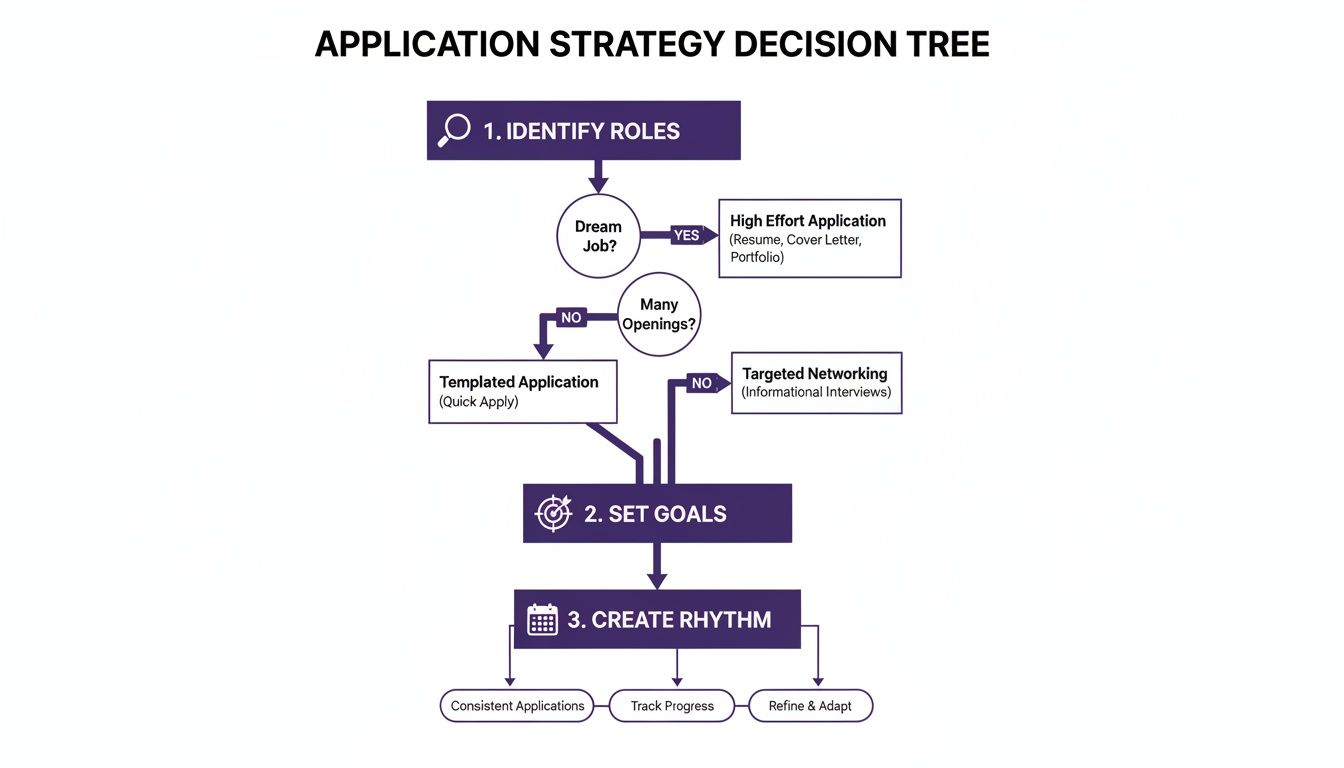
As the flowchart shows, a winning strategy starts with knowing exactly what roles you're targeting, setting clear goals, and then building a consistent rhythm to get you there.
Use AI to Personalize at Scale
Personalization is non-negotiable, but let's be honest, it’s also the most time-consuming part of the whole process. This is where AI-powered tools become your strategic partner. Instead of spending an hour tailoring each resume and cover letter, you can get it done in minutes.
Modern job trackers now come with integrated AI that can:
- Analyze job descriptions: Instantly pinpoint the most important keywords and skills a company is looking for.
- Optimize your resume: Compare your resume to the job description and suggest missing keywords to get you past those pesky ATS filters.
- Draft compelling content: Generate a solid first draft of a cover letter or help you tackle those tricky application questions.
The goal isn't to let AI do all the work. It’s about using it as a smart assistant. It handles 80% of the initial drafting, freeing you up to spend your time adding the final 20%—that personal touch and strategic polish that makes an application truly stand out.
If you want to dive deeper into this, you can learn more about how automating job applications can make your search incredibly efficient. By automating the grunt work and using AI to speed up personalization, you can realistically hit that target of 10-20 high-quality applications a week without the overwhelm. This smarter workflow is the key to maintaining momentum and landing your next role faster.
Tracking Your Progress to Optimize Your Approach
Throwing applications into the void and hoping for the best isn't a strategy. A truly successful job search is a feedback loop. You have to measure what you’re doing to get better at it.
Think of yourself as a marketer. Your resume is the ad, and an interview is a conversion. To win this campaign, you need to track a few simple but powerful numbers: applications sent, responses received, and interviews landed. This data tells a story about what’s working and, more importantly, what isn’t.
Decoding Your Job Search Data
Once you start tracking, you can stop guessing. A painfully low response rate is a flashing neon sign that your resume or cover letter isn't getting past the initial gatekeepers—whether that's an Applicant Tracking System or a real person. That's your cue to get back to the drawing board and tighten up your messaging.
Or maybe you’re getting plenty of bites, but no one is booking an interview. That pattern suggests your resume is doing its job, but something is falling flat in your initial screening calls or email exchanges. Every data point shines a light on a specific part of your process that needs a tune-up. For a deeper look at this, check out our guide on how to effectively track your job applications.
Spotting these patterns early lets you make smart, data-driven changes. Your job search goes from a game of chance to a strategic operation where you’re constantly improving.
A job search without tracking is like driving without a GPS. You're moving, but you have no idea if you're getting closer to your destination. Measuring your results is the fastest way to correct your course and find the most direct path to an offer.
Why Tracking Reinforces a Quality Approach
This analytical mindset is absolutely essential today. The worldwide average is 5.5 interviews per hire, so every single application has to be strong enough just to get you in the running. And when 59.7% of employers are complaining about unqualified candidates flooding job boards, a thoughtfully tailored application becomes your secret weapon. You can see more on these hiring trends on weforum.org.
Here’s the thing: tracking your progress naturally pushes you toward quality over quantity.
When you see that five highly customized applications landed you two interviews, while fifty generic ones got you nothing but silence, the right path becomes crystal clear. You start putting your energy where it actually gets results.
Tools like Eztrackr are built for exactly this purpose. The analytics dashboard instantly turns your application data into easy-to-read charts, showing you real trends in your success rate. It transforms those raw numbers into actionable insights, helping you double down on what works and quickly fix what doesn't. Ultimately, it helps you find your perfect answer to the question, "How many jobs should I apply to?" based on your own results.
Answering Your Biggest Job Search Questions
Even with the best strategy, you're bound to run into a few tricky situations during your job hunt. It's totally normal. Knowing how to handle these common hurdles is what separates a frustrating search from a successful one.
Let's clear up some of the most common questions that pop up when you're deep in the application trenches.
Should I Apply to Fewer Jobs but Put in More Effort?
One hundred percent, yes. It's a classic quality-over-quantity game. Ten truly customized applications will beat out a hundred generic, copy-pasted ones every single time. Why? Because most companies use Applicant Tracking Systems (ATS) to do the first round of screening. These systems are programmed to toss out resumes that don't align with the job description.
When you take the time to mirror the language and keywords from the job post, you stand a much better chance of getting your resume in front of a real human being. That extra work up front translates directly into more responses, better interviews, and way less of that soul-crushing feeling of sending applications into a black hole. For most people, aiming for 10-15 high-quality applications a week is a fantastic, sustainable pace.
How Long Should I Wait to Follow Up on an Application?
You have to walk a fine line between being persistent and being a pest. A good rule of thumb is to wait about 5 to 7 business days after you hit "submit." If the job posting listed a closing date, hold off until after that day has passed.
A quick, polite follow-up email can be surprisingly effective. It bumps your name back to the top of the recruiter's inbox. All you need to do is restate your interest and quickly mention one key reason you're a perfect match for the role. This is where a job tracker really shines—you can set reminders so you never forget to send that crucial follow-up.
Does Applying for More Than One Job at the Same Company Look Bad?
It can, but only if you're not smart about it. Applying to a couple of very similar roles—think "Content Strategist" and "Marketing Communications Specialist"—is actually a good thing. It signals a genuine interest in what the company does and shows you see a future there.
What you don't want to do is spray-and-pray, applying for every opening from accounting to engineering. That just makes you look unfocused, or worse, desperate. Remember, recruiters can see your entire application history with their company, so make sure it tells a clear and consistent story about who you are and what you want to do.
Even if you're applying for multiple roles at the same place, you have to tailor your resume and cover letter for each specific position. It shows you’re professional, detail-oriented, and serious about each opportunity.
Is There a "Best" Day of the Week to Apply for a Job?
While the quality of your application is infinitely more important than the day you send it, a little bit of timing can give you a tiny advantage. Some data suggests that applications sent on a Monday or Tuesday tend to get seen more often. They land at the top of a recruiter’s inbox right as they’re planning out their week.
But don't get too hung up on this. A stellar application sent on a Thursday will always outperform a sloppy, rushed one sent on a Monday morning. The best time to apply is as soon as you find a role that gets you excited.
And once you land that interview and get an offer, a whole new set of questions arises. A critical skill for every job seeker is negotiating salary, a final step that can have a huge impact on your long-term career.
Stop drowning in spreadsheets and start optimizing your job search. Eztrackr organizes your applications, automates tedious tasks with AI, and provides the analytics you need to land your next role faster. Take control of your job hunt by visiting https://eztrackr.app and see the difference for yourself.