A Guide to preparing for phone interview: Nail Your Next Call
Don't be fooled by the casual setting—a phone interview is every bit as important as a face-to-face meeting. It’s your first real shot to make an impression, and nailing it comes down to smart preparation. Think of it less like a quick chat and more like a strategic conversation. Success means digging deep into the company, dissecting the job description, and having your personal story ready to go—one that shows exactly why you're the right fit.
Why Your Phone Interview Preparation Matters
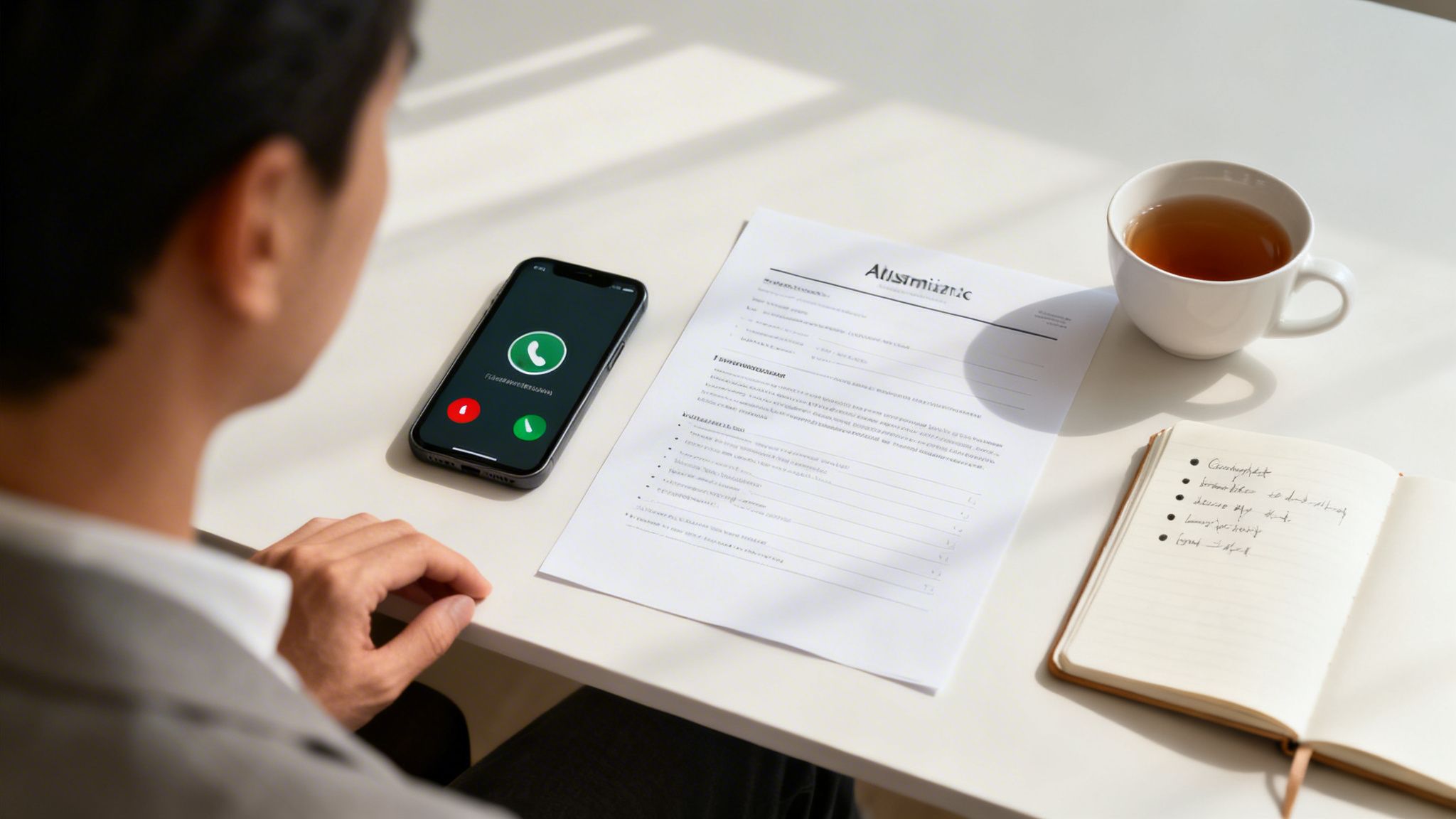
That initial call is the gatekeeper. In a job market this competitive, it’s the one hurdle where hiring managers quickly decide who’s in and who’s out. This guide will give you a clear roadmap to make sure you stand out from the very first hello.
The Stakes Are Higher Than You Think
It’s tempting to treat a phone screen casually, but the numbers tell a different story. Employers in the US sift through about 180 applicants just to make one hire. That gives you roughly a 3% chance of even landing that first call. When you consider that recruiters might only glance at a resume for a few seconds, you realize just how much is riding on this conversation.
This isn't just a formality. The interviewer is trying to quickly figure out if you're qualified, professional, and genuinely interested. If you show up unprepared, you're sending a clear message that this opportunity isn't a priority for you.
Your goal isn't just to answer questions. It's to steer the conversation, showing the interviewer that you understand their needs and are the person who can solve their problems. That’s what gets you to the next round.
Core Components of Success
So, what does solid preparation actually look like? It’s all about building a foundation of confidence and knowledge.
To get a quick overview of what we'll cover, here are the essential pillars for acing your phone interview.
Key Focus Areas for Phone Interview Prep
| Preparation Area | Why It Matters | Key Action |
|---|---|---|
| Deep Research | Shows genuine interest and helps you tailor your answers. | Go beyond the "About Us" page—look up recent news, competitors, and key people. |
| Story Crafting | Makes your experience memorable and impactful. | Prepare concise stories using the STAR method (Situation, Task, Action, Result) for key achievements. |
| Strategic Questioning | Demonstrates engagement and critical thinking. | Prepare insightful questions about the role, team, and company challenges. |
| Tech & Environment | Prevents technical glitches and minimizes distractions. | Test your phone/headset, find a quiet spot, and ensure you have a strong signal. |
Focusing on these areas will set you up for a much stronger performance. For a broader look at general interview readiness, this resource on how to prepare for interviews is a great starting point. And for more specific tips you can use in any interview format, don't miss our guide on https://www.eztrackr.app/blog/how-to-improve-interview-skills.
Building Your Pre-Call Research Strategy
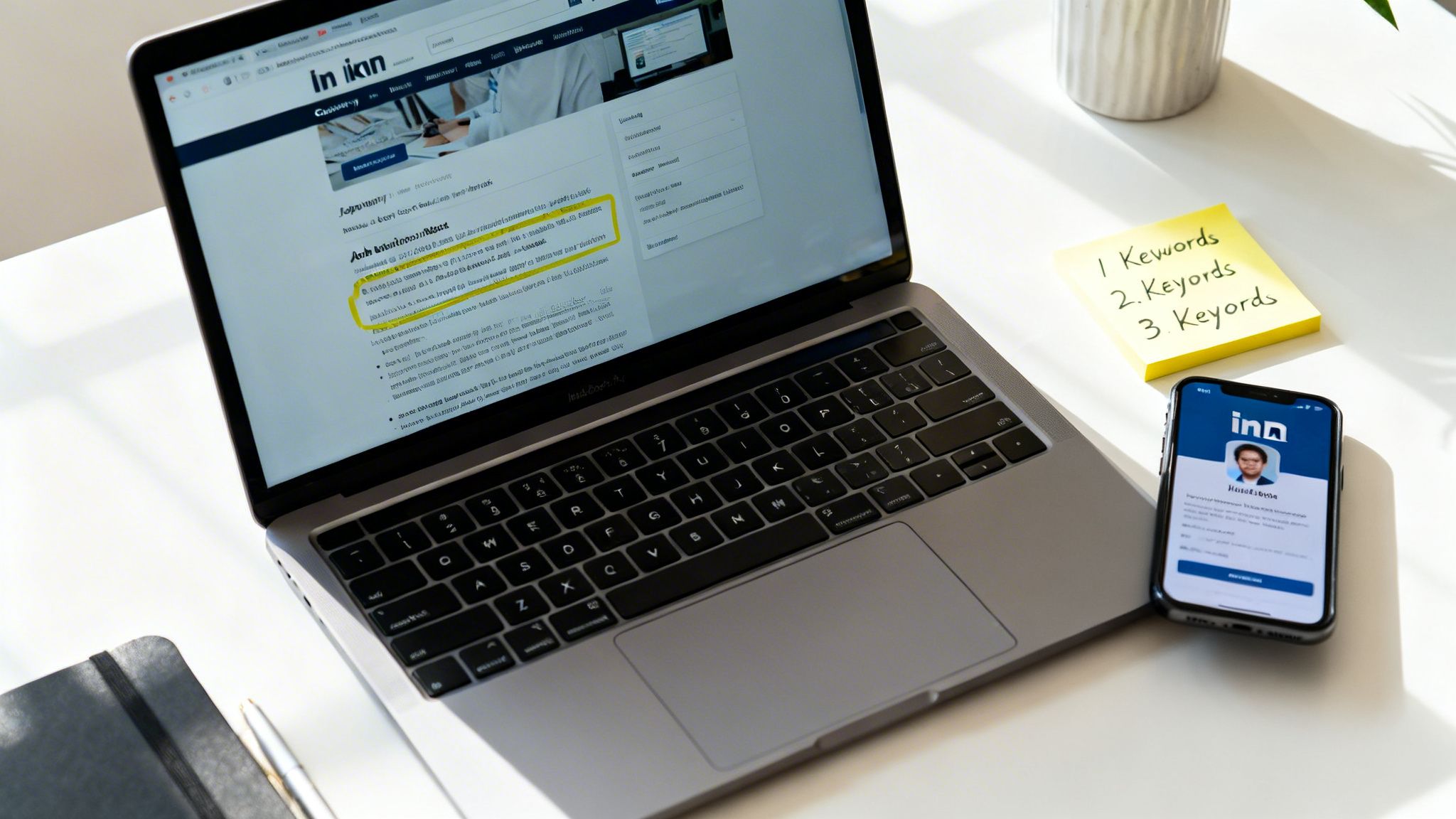
Real success in a phone interview doesn’t just happen when you pick up the phone. It starts way earlier, with a deep dive into the company and the role. This is what separates a generic applicant from a standout candidate.
Think of it this way: you’re not just memorizing the “About Us” page. You’re building a bridge between what you can do and what they desperately need.
The job description is your treasure map. Don't just skim it—dissect it. I always tell people to print it out and get a highlighter. Zero in on the core responsibilities and qualifications. These are the exact pain points the hiring manager is trying to solve.
Every single bullet point is a clue. If they need someone who can "manage cross-functional projects," your mind should immediately jump to a specific time you did just that. Pull out the keywords and tech skills they list; the recruiter's first pass is often just a search for those exact terms.
Expanding Your Research Horizons
Once you’ve got the role down, it's time to zoom out and look at the company. A quick search for recent news, press releases, or product launches gives you amazing talking points. Did they just close a new round of funding or launch a new feature? Mentioning it shows you’ve done your homework and are genuinely interested.
Then, research the people. If you know who’s interviewing you, look them up on LinkedIn. Understanding their career path, what they post about, or any shared connections helps you build rapport fast. It turns a stiff Q&A into a real conversation. For more on this, check out our guide on how to optimize your LinkedIn profile.
Going in cold is a huge mistake. Statistics show that 47% of recruiters will disqualify a candidate who clearly knows nothing about the company. And when you consider that only about one in four interviewees actually gets the job, your preparation becomes your biggest advantage. (Source).
Turning Research into Your Arsenal
Okay, you've done the digging. Now what? You need to organize it. The goal is to build a one-page "cheat sheet" you can glance at during the call. This isn't a script you read from, but a collection of your most powerful bullet points.
I recommend breaking it down into a few clear categories:
- Company Intel: Jot down their mission, main products or services, recent wins, and who their biggest competitors are.
- Role Alignment: List the top 3-5 requirements from the job post. Next to each one, write down a specific accomplishment of yours that matches it. Use numbers whenever you can (e.g., "Streamlined reporting, saving the team 5 hours per week").
- Smart Questions: Based on your research, come up with at least three thoughtful questions. Something like, "I saw the press release about the new partnership with Company X; how do you see that impacting your team's goals this quarter?" shows you're thinking strategically.
This structured approach makes the whole process feel less overwhelming. A tool can be a game-changer here, so you aren't juggling a dozen open tabs and messy documents. With Eztrackr, for example, you can use the job parsing and notes features to keep all this research attached directly to the application in your dashboard. No more last-minute scrambling.
When you put in this prep time, you walk into that call with confidence. You'll sound engaged, curious, and genuinely excited about the role—exactly what every recruiter wants to hear.
Crafting Your Message and Mastering Communication
In a phone interview, your voice is everything. It’s your only tool to project confidence, competence, and enthusiasm. With no body language or facial cues to back you up, the words you choose—and how you deliver them—carry all the weight.
It might sound silly, but try smiling when you talk. It genuinely changes the tone of your voice, making you sound more positive and approachable. Another pro tip? Stand up during the call. It boosts your energy and adds a dynamic quality to your voice, helping you sound more engaged and authoritative.
Structuring Your Stories with the STAR Method
When an interviewer says, "Tell me about a time when…," they're looking for a story, not a vague claim. The STAR method is a tried-and-true framework for turning your experiences into compelling, easy-to-follow narratives.
Here's how it works:
- Situation: Set the stage. What was the challenge or context?
- Task: What was your specific goal or responsibility?
- Action: What specific steps did you take to handle it? This is your time to shine.
- Result: End with the outcome. Use numbers and concrete results whenever possible.
Instead of just saying, "I'm a great team player," you can prove it with a real example.
"In my last role (Situation), our team was behind on a critical project because of some clunky workflows. My Task was to get us back on track. I took the initiative to introduce a new project management tool and ran a quick training session for everyone (Action). The Result was that we finished the project two days ahead of schedule and cut our time on similar tasks by 15% going forward."
See the difference? You’ve just transformed a generic buzzword into a memorable story that proves your value.
The Power of Active Listening and Rapport
Remember, an interview is a conversation, not a monologue. The best candidates are fantastic listeners. Active listening means truly understanding the question behind the question. Give yourself a second or two to pause before you answer; it shows you’re thoughtful and keeps you from accidentally cutting the interviewer off.
And if a question isn't crystal clear, don't just guess. Ask for clarification. Saying something like, "That's a great question. To make sure I'm on the right track, are you asking about X or Y?" shows you’re engaged and committed to giving a relevant answer.
Building this kind of rapport is critical. Your ability to connect on a human level often comes down to strong emotional intelligence. It helps you read the interviewer’s tone, adapt your own, and make the entire conversation feel more like a collaborative discussion.
To get your stories dialed in ahead of time, a little tech can go a long way. Using an AI-powered interview answer generator can help you brainstorm and polish your STAR-based answers. That way, when the call starts, you can stop worrying about what to say and focus entirely on how you say it.
Creating a Flawless Call Environment
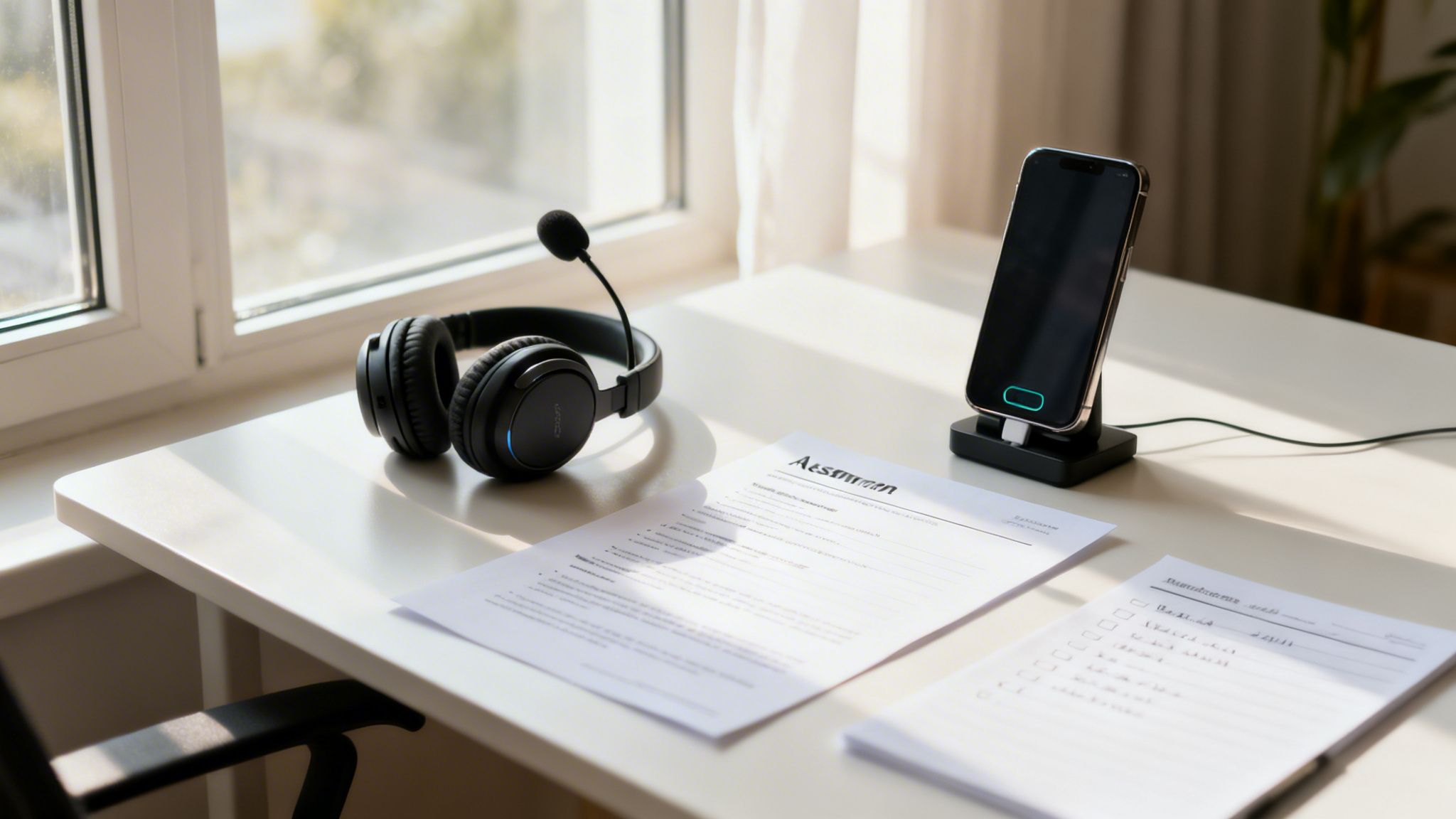
Think of your physical and technical setup as the stage for your performance. No matter how well you’ve polished your answers, a dropped call or a barking dog can completely derail your focus and leave a terrible impression. This is your chance to control the controllables.
I’ve heard horror stories from recruiters about candidates taking calls while driving, walking through a park, or sitting in a loud coffee shop. It’s a massive red flag that screams, "This job isn't my priority." Find a quiet, private room where you can shut the door and give the conversation your undivided attention.
Your Tech and Gear Checklist
Technical glitches aren’t just annoying; they can be fatal to your interview. Believe it or not, some studies show technical issues mess up as many as 62% of virtual interviews, and that process often starts with a phone screen. When you realize the average hiring process can drag on for weeks, a failed call is a setback you just can't afford. You can get a better sense of these hurdles by reading up on the challenges in the global recruitment landscape.
To make sure you're not one of the statistics, run through this quick tech audit at least 15 minutes before go-time.
- Audio Clarity: Ditch the speakerphone. A headset with a built-in microphone is a non-negotiable. It makes a world of difference in cutting out background noise and preventing that distracting echo.
- Power and Signal: Make sure your phone is fully charged or, even better, plugged in. If you're on a cell, do a quick check to ensure you have a strong, stable signal in the room you’ve chosen.
- Do Not Disturb: This is crucial. Silence every single notification on your phone and computer. An unexpected text alert or email ping can shatter your concentration and make you sound distracted.
Setting Up Your Command Center
One of the best things about a phone interview is the open-book-test feel—you can have all your notes right in front of you. Don't let this advantage go to waste by fumbling for a piece of paper mid-sentence.
Your desk should be your command center, not a source of clutter. A well-organized space allows you to access information seamlessly, keeping you calm and in control.
Before the interviewer calls, lay out your essential documents so they’re within easy reach. The goal isn’t to read from a script but to have quick reference points to jog your memory and support the conversation.
Here’s what your setup should include:
- Your Resume: Have a printed copy in front of you. The interviewer is almost certainly looking at it, and you need to be on the same page.
- The Job Description: Keep the key responsibilities and requirements in sight. This helps you tailor your answers to what they’re actually looking for.
- Your "Cheat Sheet": This is your collection of STAR method stories, key metrics that show your impact, and the thoughtful questions you plan to ask them.
An even smarter way to organize this is with a tool like Eztrackr. The Saved Notes feature lets you attach all your research, talking points, and questions directly to that specific job application in your dashboard. It puts everything you need in one organized, easily accessible place for a perfect call.
Navigating the Call and Nailing the Follow-Up

Alright, the phone is ringing. This is it. All that prep comes down to this conversation.
Take a breath. Start with a clear, friendly greeting and make sure you can hear them well. The first few seconds really do set the stage.
You'll almost certainly hear some version of, "So, tell me about yourself." This isn't your cue to walk them through your entire life story. Think of it as your verbal highlight reel—a quick, compelling pitch that should last about 60-90 seconds. Your goal is to immediately connect your experience to what they're looking for.
Your answer should be a highlight reel, not a full documentary. Briefly cover your current role, a key accomplishment that aligns with the job description, and why you are excited about this specific opportunity. This focused approach immediately frames you as a relevant and strategic candidate.
As you get into the meat of the conversation, really listen. Don't just wait for your turn to talk. If a question catches you off guard, it's totally fine to take a beat. A simple, "That's a great question, let me think on that for a second," sounds way more confident than a rambling, disorganized answer.
Asking Questions That Make an Impact
When the tables turn and the interviewer asks, "Do you have any questions for me?", your answer should always be a resounding "Yes." This is where you shift from a candidate being grilled to a professional peer having a conversation.
Now's not the time to ask about PTO or salary—save that for later. You want to ask questions that show you've been thinking about the role on a deeper level.
Try a few of these:
- On the Role: "What would a successful first 90 days look like for someone in this position?"
- On the Team: "Could you tell me a bit about the team's culture and how this role contributes to it?"
- On the Future: "What are some of the biggest challenges the team is working to solve right now?"
Smart questions show you're not just looking for any job; you're looking for the right job. You’re interviewing them, too.
Sealing the Deal with a Strong Follow-Up
Don't celebrate just yet—you’re not done when you hang up. A quick, thoughtful follow-up email is a non-negotiable step that, frankly, too many people skip. It's your final chance to make a great impression.
Try to get it sent within 24 hours. Keep it short, professional, and add a personal touch.
Make sure your email does three things:
- Says thank you: Address the interviewer by name and thank them for their time.
- Makes a connection: Mention something specific you discussed that resonated with you, whether it was a project, a team goal, or a company value. It proves you were listening.
- Restates your interest: End with a brief line about your continued enthusiasm for the opportunity and why you’re a great fit.
This simple gesture shows you're organized and genuinely interested, keeping you top of mind. For a deeper dive, our guide on how to follow up with a recruiter has some great templates and pro tips.
Got Questions About Phone Interviews? We've Got Answers.
Even with the best prep, a few questions can still pop up before a phone interview. Let's clear the air on some of the most common ones so you can go into that call feeling cool, calm, and collected.
How Long Should a Phone Interview Last, Anyway?
Most phone screens clock in somewhere between 15 and 45 minutes. Recruiters are usually trying to get a quick read on your core qualifications and see if you’d be a good fit, so don't sweat it if the call feels brief.
If the conversation stretches past the 30-minute mark, that's often a great sign they're interested. But on the flip side, don't get discouraged if a fantastic chat wraps up in 20 minutes. The quality of the conversation is always more important than the time on the clock.
Is It Okay to Have Notes During a Phone Interview?
Not only is it okay—you absolutely should. This is one of the biggest perks of a phone call versus an in-person meeting. Having your notes handy means you won't blank on a major accomplishment or forget that killer question you wanted to ask.
Just think of them as your cheat sheet, not a script. Reading word-for-word will make you sound stiff and unnatural. Instead, jot down some bullet points to jog your memory on things like:
- Key Metrics: Hard numbers that show your impact (e.g., "Grew social media engagement by 25%").
- STAR Stories: Quick prompts for your best examples to answer those "tell me about a time when…" questions.
- Your Questions: The smart, insightful questions you prepared for them.
This way, you’ll sound prepared and professional without losing that natural, conversational vibe.
What Are the Biggest Red Flags to Avoid?
A few common slip-ups can sink your chances fast. The absolute biggest red flag is sounding unprepared or, even worse, uninterested. If you don't know what the company does, you've pretty much lost before you've even started.
Another huge mistake is bad-mouthing a former boss, company, or coworker. It just comes across as unprofessional and can make the interviewer wonder if you'll be a problem down the line.
From a recruiter's point of view, a candidate who complains about past jobs is often seen as a potential source of future drama. Always frame your experiences in a positive or neutral light, focusing on what you learned and how you moved forward.
Other critical mistakes to sidestep include:
- Talking over the interviewer or completely dominating the conversation.
- Having a terrible connection or a ton of background noise (barking dogs, café chatter).
- Forgetting to ask any questions when they turn the tables on you.
- Not being able to connect the dots between your skills and what the job actually requires.
Dodging these pitfalls is just as crucial as highlighting your strengths.
Tired of juggling spreadsheets and sticky notes? Eztrackr pulls your whole job search into one place, from the first application to the final offer. With smart AI tools and a clean dashboard, you can stop organizing and start focusing on what matters—acing the interview. Get started with Eztrackr for free.