How to Follow Up on Job Applications and Get Noticed
So you've sent your application off into the ether. What now? If you think hitting "submit" is the last step, you might be waiting a while.
The real key to standing out isn't just a killer resume—it's a smart follow-up. This isn't about being annoying or desperate. It's about being a pro. It’s about making sure your carefully crafted application doesn't get buried in the digital slush pile.
Why a Thoughtful Follow-Up Is Your Secret Weapon
We've all been there. You spend hours tweaking your resume and writing the perfect cover letter, only to be met with deafening silence. It feels like shouting into the void.
In a market where a single corporate job posting can pull in hundreds of applicants, just sitting back and waiting is a surefire way to get lost in the crowd. A well-timed, thoughtful follow-up is one of the few things you can actually do to nudge the odds back in your favor.
Breaking Through the Digital Noise
Let’s be real: most big companies (and even a lot of smaller ones) use Applicant Tracking Systems (ATS) to do the initial dirty work of sorting through resumes. These bots scan for keywords and qualifications, meaning a real human might never even see your application.
With a staggering 88% of companies now using AI screening tools in their hiring, your resume has to beat the machine before it can impress a person. A quick follow-up can sometimes be the very thing that triggers a manual review, giving your application the human touch it deserves.
Beyond the tech, hiring managers and HR teams are just plain swamped. Your follow-up acts as a polite, professional tap on the shoulder. It bumps your name back to the top of their inbox and reminds them you exist.
More than that, it shows off some of the most sought-after soft skills:
- Initiative: You're not just passively waiting for things to happen. You're in the driver's seat.
- Professionalism: You know how to communicate clearly and respectfully.
- Real Interest: It proves you're not just spamming applications everywhere; you genuinely want this job at this company.
Playing the Long Game in Today's Job Market
The hiring process isn't what it used to be. It's slower and way more complicated. Job seekers are often firing off applications for over 100 different positions, and the average time to get that first offer can stretch to nearly 69 days.
That kind of timeline means you have to be persistent. You have to stay on their radar. Only 41% of new hires actually land a job within their first month of searching, which is a drop from previous years. This really drives home how important it is to stay visible over the long haul. You can dive deeper into these numbers in this full job search research report.
A follow-up isn't just a "checking in" email. It's a strategic move to keep the conversation alive. It turns you from just another entry in a database into an engaged, memorable person.
Finding the Perfect Timing for Your Follow-Up
Figuring out when to send that follow-up email can feel like walking a tightrope. Move too soon, and you might come off as pushy. Wait too long, and your application could get lost in the shuffle. Nailing the timing is all about showing you're eager without being overbearing.
As a general rule, give it one to two weeks after you hit "submit" before you send that first check-in. This gives the hiring team some breathing room to get through the initial wave of applications. If the job posting lists a specific application deadline, always wait until after that date has passed.
Decoding the Hiring Timeline
Every company operates on its own clock. Some are lightning-fast with interview requests, while others have a much more drawn-out, multi-stage review process. Your best bet is to make an educated guess based on what you know.
Data shows the median time from application to the first interview is around 6 days, with about 75% of applicants hearing something back within two weeks. This makes that one-to-two-week window a real strategic sweet spot. But here's the kicker: only about 3 in 100 applicants actually land an interview. A polite, well-timed follow-up can be the very thing that keeps your name from getting buried.
When you're juggling multiple applications, trying to remember who you heard from and when can get messy. This is where a good system comes in handy. Keeping a log is a core part of an effective job application tracking strategy and ensures you never miss a beat.
This timeline gives you a great visual of the entire journey, from applying to following up, so you can see exactly where you are in the process.
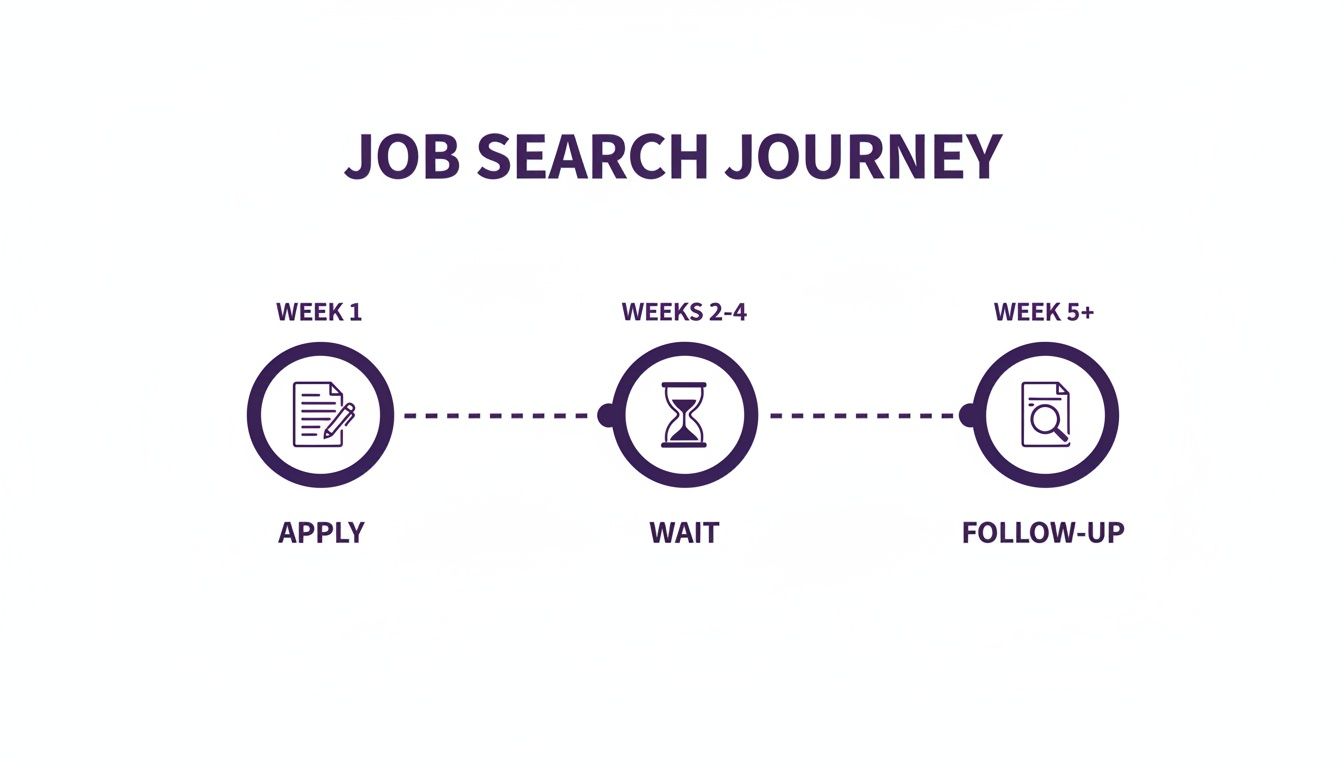
The main takeaway? That "wait" period isn't passive. It's your time to plan your next move.
To make things even clearer, here’s a simple timeline you can follow.
Recommended Follow-Up Timeline for Job Applications
| Stage | When to Follow Up | Primary Goal |
|---|---|---|
| Initial Application | 1-2 weeks after applying | Gently remind the hiring manager of your application and reiterate your interest. |
| Post-Interview | Within 24 hours | Send a personalized thank-you note to express gratitude and reinforce key discussion points. |
| Post-Interview (No Response) | 1 week after the thank-you note | Send a polite check-in to inquire about the status of the hiring process. |
This schedule provides a clear, professional cadence that keeps you on their radar without being a nuisance.
Post-Interview Follow-Up Cadence
Once you've had an interview, the rules of the game change. Your follow-up needs to be much more immediate and structured. Here’s a simple rhythm that works every time:
- Within 24 Hours: Send a thank-you note. This is absolutely non-negotiable. Make it prompt, professional, and reference something specific you discussed to jog their memory.
- One Week Later: If you haven't heard back and the timeline they gave you has passed, it’s perfectly fine to send a brief check-in. This is just a polite nudge asking for an update on their decision-making process.
The real purpose of a follow-up isn't just to ask, "So, did I get the job?" It's a chance to show your professionalism, restate your enthusiasm for the role, and subtly remind them of the value you’d bring. This thoughtful approach is what keeps you top-of-mind for all the right reasons.
Choosing Your Follow-Up Channel
How you reach out matters just as much as when you do it. While it might be tempting to slide into a hiring manager’s DMs or even pick up the phone, your choice sends a clear message about your professional judgment. Getting this right ensures your follow-up actually helps your cause.
Let's cut to the chase: email is the gold standard. It hits the sweet spot of being professional, creating a paper trail, and—most importantly—being non-intrusive. Recruiters are busy people. An email lets them review your message on their own time, a courtesy they will absolutely appreciate.
The Power of Email and LinkedIn
The real trick to a killer follow-up email is getting it to the right person. Firing off a message to a generic "jobs@" or "careers@" inbox is like sending it into a black hole. Your first mission is to find the actual human being in charge of hiring for the role.
Time for a little detective work. You'd be surprised what you can uncover:
- Scour the Job Posting: Sometimes, a name or a team is mentioned right in the description. It’s a long shot, but always worth a look.
- Check the Company Website: The "Our Team" or "About Us" pages can be a goldmine for identifying department heads or team leads.
- Use LinkedIn: This is your best friend. Search for the company, then filter their employees by titles like "Recruiter," "Talent Acquisition," or the manager of the department you’re applying to (e.g., "Marketing Manager").
Once you have a name, your subject line is the next hurdle. It needs to be crystal clear so it doesn't get ignored or, worse, sent straight to spam.
A subject line like "Follow-Up on Application for [Job Title]" is perfect. It's direct, helpful, and immediately tells them who you are and why you’re in their inbox.
LinkedIn can be a great secondary touchpoint, but it has its own unwritten rules. Sending a connection request with a short, polite note can work wonders, especially if you have mutual connections. But a long, unsolicited message to a stranger can feel a bit invasive. Remember, building your network is a huge part of the job hunt. If you want to get better at this, check out these tips on job search networking to make sure you're doing it right.
When to Consider a Phone Call (Almost Never)
So, what about calling? Honestly, in today’s world, an unscheduled call is almost always a bad idea.
Recruiters are juggling dozens of candidates and endless meetings. A call out of the blue forces them to drop everything and context-switch, which most people don't appreciate. One recruiter I know said a surprise call guarantees they can't give the candidate their full attention, which helps no one.
The only exception? If the job description specifically says "calls welcome" or if you've already been communicating with the recruiter over the phone. Otherwise, stick to email. You want to be remembered as the polished, considerate candidate, not the one who interrupted their day.
How to Write a Follow-Up Email That Gets a Reply
Let's be real: a generic, copy-paste follow-up email is the digital equivalent of a limp handshake. It’s a missed opportunity. A well-crafted follow-up, on the other hand, is your chance to stand out from the crowd and prove you're a thoughtful, professional communicator. The goal is to be memorable for all the right reasons.
This isn’t just about nudging them for an update. It’s about adding a small piece of value with every single interaction. And before you even think about hitting "send," it's worth taking a minute to understand why emails get lost in the spam folder—the last thing you want is for your perfectly crafted message to go completely unseen.

Anatomy of a Powerful Follow-Up Email
Every truly effective follow-up email has a few key ingredients. Think of it less like a rigid template and more like a recipe you can tweak based on the situation.
- A Crystal-Clear Subject Line: Make their life easy. Something direct like, "Follow-Up on Application for [Job Title]" tells the recruiter exactly who you are and why you're in their inbox. No guesswork required.
- A Polite and Personal Greeting: Always try to address the hiring manager by name. "Dear Hiring Manager" is a last resort, but finding the actual contact person shows you’ve done your homework.
- A Quick Reminder: Don't make them dig. Briefly state the position you applied for and the date you sent your application.
- A Reiteration of Interest: This is the heart of your message. Reconnect your excitement for the role with something specific—a detail from the job description or a company value you admire.
Your follow-up should be a conversation starter, not a demand for an update. You're aiming for a tone that's confident and interested, not desperate. It's all about building a positive rapport.
Crafting Your Key Message
The body of the email is where you get to make your case again, but this time in a much more concise way. Your value proposition needs to be short and sharp.
Think back to your original application. Just like you tailored your resume, you need to frame your skills strategically in your follow-up. If you need a refresher on connecting your experience directly to what a company is looking for, our guide on https://www.eztrackr.app/blog/how-to-write-a-cover-letter has some great pointers.
For example, instead of just saying, "I'm still very interested," try something with more substance:
"I was particularly excited about the role's focus on community engagement, as it aligns perfectly with my experience launching a successful volunteer program at my previous company."
See the difference? That simple tweak connects your past wins to their future goals. It proves you've done more than just scan the job title; you actually understand what they're trying to accomplish.
Adding Value and Closing Strong
Your follow-up is a prime opportunity to be genuinely helpful, especially in a post-interview thank-you note. Did you discuss a particular challenge the team is working through? You could briefly mention an article or a resource you came across that felt relevant.
This small act transforms you from a candidate who is asking for something into a potential colleague who is already offering value. It's a small detail that can make a huge impact.
Finally, wrap it up with a clear and polite call to action. End with a professional closing like "Best regards" or "Sincerely," followed by your name and contact info. Keep it simple and make it incredibly easy for them to take the next step.
Poor communication is a massive pain point for job seekers. In fact, a staggering 65% of applicants say they deal with inconsistent communication from employers, which directly impacts their experience. A professional follow-up helps you bridge that gap and immediately positions you as a more attractive candidate.
Handling Radio Silence and Other Tricky Scenarios
You’ve crafted the perfect follow-up, hit send, and then… crickets. That deafening silence is one of the most frustrating parts of any job search. The trick is having a plan to stay on their radar without coming across as desperate.
After that first follow-up, give it about another week. If you still haven't heard anything, it's okay to send one last, very brief check-in. This isn't the time for a long email; you just want to politely bump your name to the top of their inbox and gracefully close the loop on your end.
If that final nudge goes unanswered, it's time to mentally move on. Chasing them down with more emails won't help your chances and could even hurt your reputation with the company. Your energy is much better spent on other promising leads.
Decoding Vague Replies and Job Repostings
Sometimes, you get a reply, but it’s maddeningly vague. Phrases like "we'll keep your resume on file" or "we're still finalizing the timeline" usually feel like a soft 'no.' And often, they are. Your best bet is to send a quick thank-you note and then shift your focus.
But what if you see the exact same job reposted? It’s confusing, for sure. This could mean a few things:
- They didn't find the right person in the first batch of applicants.
- An internal candidate they had lined up didn't work out.
- Company policy requires them to keep the listing open for a set amount of time.
If you’re still really excited about the role, you can see this as an opening. You could apply again through the new post or send a quick follow-up referencing your first application and reiterating your interest. It can actually show your dedication.
In these awkward situations, your goal is always to stay professional. How you navigate uncertainty and potential rejection speaks volumes about your character.
Navigating Rejection with Grace
Getting that "thanks, but no thanks" email stings. No way around it. But how you respond can leave a lasting positive impression.
Always thank the hiring manager for their time and consideration. If you feel it’s appropriate, you can even politely ask for any feedback on your application or interview that might help you in your search.
This kind of professional courtesy can pay off down the road—recruiters have long memories for great candidates who just weren't the right fit at that moment. For a deeper dive into turning a no into a future yes, check out our guide on dealing with job rejection. Remember, the job search is a marathon, and every conversation is a chance to build your network.
Answering Your Biggest Follow-Up Questions
Even with the best templates in hand, following up on a job application can feel like walking a tightrope. You've got questions, and I've got answers based on years of seeing what works—and what definitely doesn't.
How Many Times Is Too Many?
This is the big one, isn't it? You want to be persistent, not a pest. The truth is, there's a fine line.
The sweet spot is one or two follow-ups. That's it. Your first check-in should be about a week or two after you apply. If you get radio silence, you can send one final, brief message about a week after that. Any more than that, and you risk damaging your reputation with that recruiter and company. It's time to move on.
What if the Job Post Says “No Calls or Emails”?
When a company explicitly says "no follow-ups," you have to listen. Period. Ignoring that instruction is the fastest way to land your application in the trash. It immediately shows them you can't follow simple directions.
So, what’s the alternative?
- Go through the side door. This is where networking on LinkedIn becomes your best friend. A warm introduction from a current employee is powerful and bypasses that "no contact" rule entirely.
- Let your application speak for itself. This means your resume and cover letter need to be absolutely killer. They have to do all the talking for you, so make sure they're tailored, polished, and compelling.
- Channel your energy elsewhere. Instead of trying to crack a closed door, focus your follow-up efforts on the other opportunities in your pipeline.
A savvy approach is often indirect. Sending a polite message to a recruiter on LinkedIn to ask about company culture isn't a direct follow-up. It's a networking move that can get you on their radar without breaking their rules.
How Can I Add Value in My Follow-Up?
A message that just asks, "Any updates on my application?" is a missed opportunity. It's forgettable. Your goal is to stand out and remind them why they should be interested in you.
Instead of just rehashing your resume, connect your skills to something happening with the company right now. Did they just launch a new product? Get mentioned in a big article? Use that. Tying your experience to their recent wins shows you’re not just looking for any job—you're genuinely invested in their work. For more great ideas on this, check out these Job Application Strategies and Insights.
It can be as simple as this:
"I saw the recent press on your new sustainability initiative and was really impressed. My experience in managing similar green projects at my last role makes me even more excited about the possibility of contributing to your team."
See the difference? That little touch transforms your email from a generic poke into a powerful statement about your fit and enthusiasm.
Ready to stop juggling spreadsheets and start landing interviews? Eztrackr helps you manage every aspect of your job search, from saving applications with a single click to crafting perfect, AI-powered follow-ups. Take control of your job hunt by visiting https://eztrackr.app today.