How to Accept Job Offer: A Confident, Clear Next Step
That phone call you’ve been waiting for has finally arrived—congratulations! Your very next move is to show your excitement, ask for the full offer in writing, and request a reasonable amount of time to look it over. Never, ever accept on the spot. A thoughtful pause shows you’re a professional, not that you’re hesitant.
You Got the Offer What Happens Next

After what feels like an eternity of applications and interviews, seeing that "Offer" status can feel like you’ve crossed the finish line. But really, it’s just the start of a brand new, and incredibly important, phase. How you handle these next few moments sets the tone for your entire relationship with this company.
The goal isn't just to say "yes." It's to smoothly transition from a hopeful candidate to a valued future employee, with total confidence and clarity on your side. That first conversation, whether it’s a call or an email, is your chance to manage expectations from the get-go.
Your Initial Response Strategy
When you get that verbal offer, your response needs to be positive but non-committal. Thank the hiring manager genuinely and let them know how excited you are about the opportunity. This keeps the good vibes going without locking you into anything before you’ve seen the fine print.
Next, you need to ask for all the details in a formal document. This written offer is non-negotiable and is the only thing that truly matters. It should clearly spell out:
- Compensation: The exact base salary, any bonus structures, and stock options.
- Benefits: A summary or, even better, a link to the detailed info on health insurance, retirement plans, and other perks.
- Logistics: Your official job title, your reporting structure, and a proposed start date.
- Time Off: The nitty-gritty on vacation days, sick leave, and company holidays.
Asking for this isn't a sign of distrust. It actually shows you’re thorough and serious about the role. As you navigate these final stages, understanding all the different job application status meanings can also give you a better sense of where you stand in the process.
Setting a Decision Timeline
Finally, ask for a clear timeframe to make your decision. Something simple like, "This is fantastic news! Could I take a couple of days to review the written offer and get back to you by Friday?" is completely standard. It gives you the space you need to evaluate everything without feeling rushed.
A rushed acceptance often leads to overlooked details and future regret. Giving yourself 24-48 hours to review the full written offer ensures you are making an informed decision that aligns with your career goals, not just reacting to the excitement of the moment.
Nailing this initial conversation is key. Here’s a quick-reference guide to make sure you handle it perfectly.
Initial Job Offer Response Do's and Don'ts
| Action | Do | Don't |
|---|---|---|
| Express Gratitude | "Thank you so much for the offer! I'm very excited about this opportunity." | "Okay, thanks." or jump straight into asking about salary. |
| Request Written Offer | "Could you please send over the formal offer letter so I can review the details?" | Assume the verbal offer is final or complete. |
| Ask for Time | "Would it be possible to have until the end of the week to provide my final decision?" | Feel pressured to say "yes" immediately on the phone call. |
| Maintain Enthusiasm | Keep your tone positive and engaged throughout the conversation. | Sound hesitant or indifferent, which could be misinterpreted. |
Getting these four things right ensures you start your new professional relationship on the strongest possible footing. It’s all about being gracious, thorough, and in control.
It's easy to get tunnel vision when a job offer lands in your inbox. That big salary number can be hypnotic, but it’s rarely the whole story. I've seen too many people accept a seemingly great offer only to regret it months later because of terrible benefits or a soul-crushing work environment.
To make a decision you'll be happy with long-term, you have to look at the complete picture. This isn't just about the money; it's about your well-being, your growth, and your day-to-day happiness.
Breaking Down the Total Compensation Package
First things first, let's look beyond the base salary. "Total compensation" is the key phrase here, and it includes every financial perk the company is offering. When you get that written offer, comb through it for these details:
- Bonuses and Incentives: Is there a sign-on bonus? Are there annual or quarterly performance bonuses? Get clear on how they're calculated and when you can expect them.
- Stock Options or Equity: If the company is public or pre-IPO, equity can be a massive financial game-changer. You need to ask about the vesting schedule and the total value of the grant to understand what it’s really worth.
- Retirement Plans: Does the company offer a 401(k) or a similar retirement plan? The magic question is: do they offer a matching contribution? A company match is literally free money—don’t leave it on the table.
A job with a slightly lower base salary but a generous 401(k) match and a guaranteed annual bonus could easily put more money in your pocket over time. For a framework to compare these moving parts, check out our guide on how to evaluate job offers.
Looking at Benefits and Your Actual Life
Now for the parts that impact your wallet and your sanity every single day: the benefits and the work-life fit.
A top-tier health insurance plan with low deductibles can save you thousands of dollars a year, especially if you have a family. Generous paid time off (PTO) isn't just a nice-to-have; it's crucial for avoiding burnout. Dig into their parental leave policies, wellness stipends, and professional development budgets, too. These perks show you how much a company is willing to invest in its people.
As you're reviewing the offer, it’s also a good idea to understand the legal aspects of employment contracts, which outline your rights and obligations.
The interview process itself is your first real glimpse into the company culture. If they were respectful, transparent, and organized, that’s a great sign. In fact, a whopping 66% of applicants say they accept an offer primarily because they had a positive experience during the hiring process.
Remember, after sending out anywhere from 32 to 200+ applications to get this offer, you're in a position of power. The average time-to-hire is 42 days, so you have time to think this through. Don't let anyone rush you into a decision.
The goal isn't just to find the offer with the highest salary. It’s to find the one that truly aligns with what you want out of your career and your life.
You've done the hard work of evaluating the offer, and the decision is a clear "yes." Now what?
How you actually accept the job is your first official move as a new team member, and it sets the tone for your entire professional relationship. It’s a two-part process: a quick, personal phone call followed by a formal, clear-as-day email.
Think of it this way: the phone call shows your genuine enthusiasm, but the email is the official handshake on paper. It’s the document that locks in the terms and protects both you and your new employer from any future confusion.
Making the Call to Say "Yes"
When you dial up the hiring manager, your goal is to be upbeat, professional, and straight to the point. This isn't the time to bring up last-minute questions or re-open negotiations. This is purely for delivering the good news.
You can say something simple and effective like:
"Hi [Hiring Manager's Name], it's [Your Name] calling. I wanted to follow up on the offer for the [Job Title] position. I've reviewed everything, and I am absolutely thrilled to formally accept! I can't wait to get started and contribute to the team."
From there, you can quickly confirm the start date you've settled on and ask what comes next. They'll almost certainly mention that HR will be sending over paperwork, which is the perfect lead-in for your follow-up email.
Making the final call to accept often comes after weighing a lot of different factors, from salary and benefits to the gut feeling you get about the company culture. It's a balancing act.
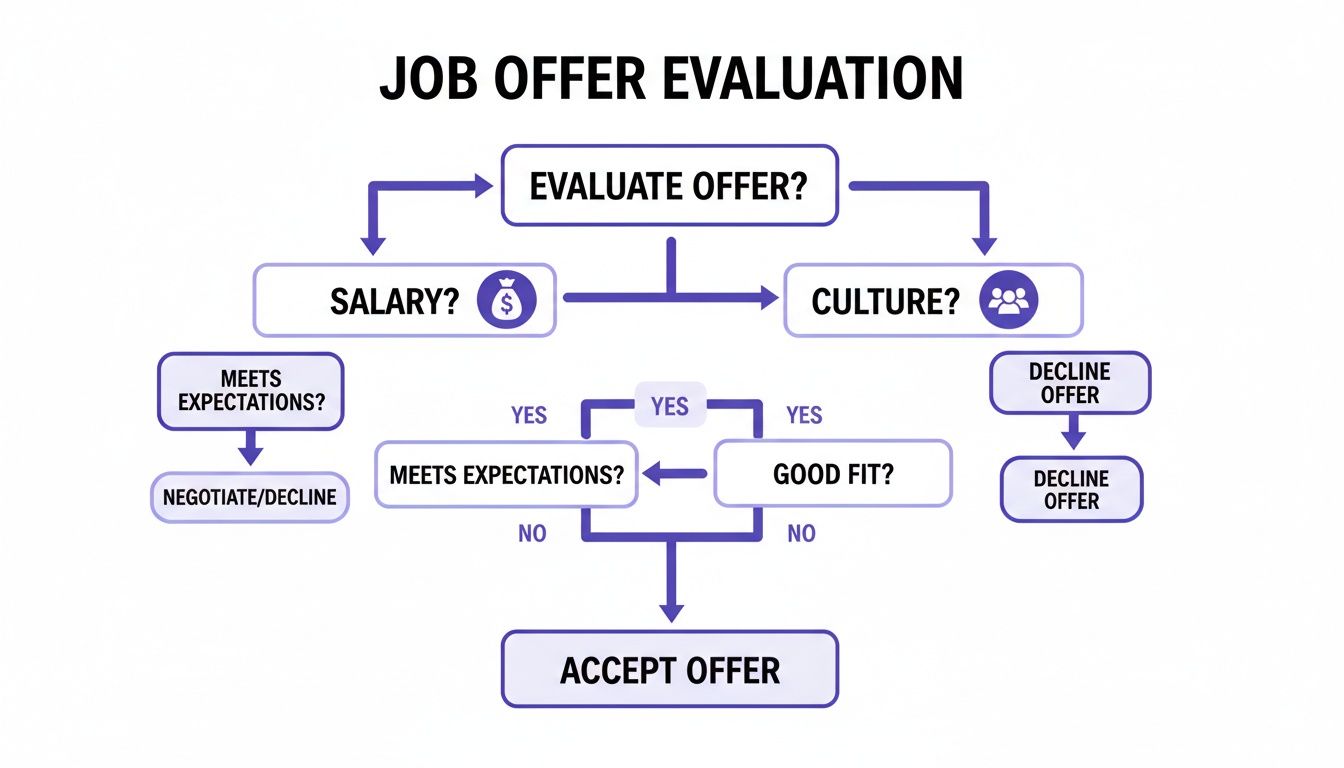
This kind of thought process ensures that when you finally do say yes, you're making a choice that aligns with both your bank account and your long-term happiness at work.
Nailing the Written Acceptance Email
Your acceptance email is more than just a formality; it's a critical piece of documentation. It puts your agreement in writing and eliminates any gray areas. Once you're ready to send it, it helps to know exactly how to accept an offer letter so you can do it with total confidence.
Every acceptance email you send should hit four key points:
- A No-Nonsense Subject Line: Something like "Job Offer Acceptance – [Your Name]" works perfectly. It’s easy for HR to spot, sort, and file.
- An Enthusiastic Opening: Kick things off by thanking them for the opportunity and clearly stating you’re accepting the specific role.
- A Quick Confirmation of Terms: Gently restate the key details—job title, salary, and start date. This is just to make sure everyone is on the exact same page.
- A Professional Sign-Off: Wrap it up by reiterating your excitement and letting them know you’re ready for the onboarding paperwork.
In a market where recruiters are juggling a ton of candidates, a prompt, professional response really makes a difference. Recruiters in the U.S. manage an average of 54 hires a month (85% above the global average) but struggle with a 79% offer acceptance rate—the lowest in a recent global study. That means roughly one in five candidates they extend an offer to says no.
Your clear, positive communication helps you stand out and reinforces they made the right choice. After all, a great hiring experience is what drives 66% of candidates to accept. If you want to brush up on your messaging, these professional email writing tips are a great place to start.
You've navigated the interviews, aced the final round, and the offer is in your hands. It feels like you've crossed the finish line, right? Almost.
Just when you think it's a done deal, a couple of common hurdles can pop up: the infamous counteroffer from your current boss and the standard contingencies from the new company.
Learning to handle these with a cool head is the final piece of the puzzle. It’s what ensures you start your new role on the right foot, without leaving a trail of burned bridges behind you.
The Awkward Dance of the Counteroffer
The moment you hand in your notice, your current employer might suddenly find the budget for that raise you've been asking for. This is the classic counteroffer. While it can feel validating, you need to pause and think critically.
Why are they only now willing to pay you what you're worth?
More often than not, a counteroffer is just a temporary band-aid. The real reasons you started looking for a new job—maybe a toxic manager, a dead-end career path, or a soul-crushing commute—aren’t going to magically vanish with a bit more cash.
It's so tempting, I get it. But the stats don't lie. A huge percentage of people who accept a counteroffer are back on the job market within a year. The underlying problems almost always resurface.
How to Turn Down a Counteroffer Without the Drama
When you get a counteroffer, the best move is to be polite but firm.
Thank your manager for the offer. Acknowledge the gesture. But then, calmly explain that your decision is final and was based on more than just the money. This shows respect, maintains the relationship, and makes it clear that the negotiation is over.
You’ve already put in the work to find an opportunity that genuinely excites you and aligns with your long-term goals. Don't let a last-minute pay bump distract you from the real prize: a better career and work environment.
"Just One More Thing…" Understanding Offer Contingencies
So you've officially said "yes!" to the new job. The next thing you'll likely hear about are contingencies. Don't sweat it—this is a completely standard part of the process for most companies.
These are simply conditions that need to be met before everything is 100% official.
Here are a few of the most common ones you'll run into:
- Background Check: They'll verify your employment history, education, and criminal record. The key here is honesty. If there's something that might show up, be proactive and mention it to the recruiter beforehand.
- Reference Checks: The hiring manager will be calling the people you listed as references. It’s a great idea to give your references a quick heads-up, reminding them of the role and company so they're ready for the call.
- Drug Screening: This is pretty common, especially in certain industries. It's usually a quick trip to a local lab designated by the company.
Getting through these final steps is all about patience and good communication. Your new HR contact will walk you through everything, so just follow their lead and respond quickly to their requests.
Pro Tip: Don't give notice at your current job until you have written confirmation that all contingencies have been cleared. This is your safety net, protecting you in the rare case something unexpected comes up.
Once you’ve cleared the contingencies, you’re in the home stretch! If you're still working through the finer points of your new package, be sure to check out our complete guide on how to negotiate a job offer.
Your Final Checklist Before Day One

That stretch of time between saying “I accept” and walking in for your first day isn't just a waiting period. Think of it as a crucial runway. This is your chance to manage a graceful exit from your old job while setting the stage for a killer start at the new one.
Nailing these last few steps means you’ll show up on day one feeling organized, confident, and ready to get to work.
First up, the big one: resigning from your current role. No matter how you feel about leaving, you have to handle this with class. Your professional reputation is built over a lifetime, and burning bridges is never a good look. How you leave is just as important as how you arrive.
Resigning With Professionalism
You’ll want to draft a formal resignation letter. It doesn't need to be a novel—short, sweet, and professional is the way to go. Just state your intention to resign and clearly specify your last day of employment. Unless your contract says otherwise, a two-week notice is standard practice.
Next, schedule a private meeting with your manager. This is news you deliver face-to-face (or over video), not in an email. Bring your letter with you. Be ready for anything from a counteroffer to a cold shoulder, but keep your tone positive and focused on the future.
Those final two weeks are your last chance to shine. Make them count. Go above and beyond to document your work, help train your replacement, and ensure a smooth handover. It's the kind of professional courtesy that people remember.
Then there’s the exit interview. It can be tempting to air all your grievances, but resist. Offer constructive, thoughtful feedback if asked, but avoid turning it into a complaint session. The goal is to leave on the best possible terms.
Preparing for Your New Role
While you're tying up loose ends, your new employer will likely start sending things your way. Usually, it's a welcome packet or some onboarding documents. Don't let them sit in your inbox—jump on them right away.
This is your first peek behind the curtain. Pay close attention to a few key things:
- Company handbooks: Get a feel for the company policies and culture. Knowing the rules of the road from the start saves headaches later.
- Benefits enrollment: Look for deadlines! You don't want to miss the window for signing up for health insurance or retirement plans.
- Payroll and tax forms: Get these filled out quickly and accurately. Nothing's worse than a first-paycheck mishap.
Paperwork aside, you can start building connections before you even step in the door. Find your new manager and a few teammates on LinkedIn and send a quick, friendly connection request. Something simple like, "Hi [Name], I'm so excited to be joining the team on [Start Date] and look forward to working with you!" goes a long way.
It’s a small gesture, but it shows you're engaged and eager to start collaborating. It's a key part of how to accept a job offer that sets you up for a smooth landing.
You've Got Questions? We've Got Answers
Getting to the finish line of a job hunt is exciting, but it can also kick up a cloud of last-minute questions. You've got the offer, you're ready to say yes, but what about the timing, the etiquette, or those tricky "what if" scenarios? Let's clear the air on some of the most common questions people have right before they accept.
How Long Do I Have to Decide on a Job Offer?
Most companies will give you somewhere between 24 hours and a full week. There's no single standard, as it often boils down to the industry, how senior the role is, and just how quickly they need someone in that seat.
It's completely normal and professional to ask for a bit of time to go over the written offer. No one expects you to make a life-changing decision on the spot.
A simple, "Thank you so much for this offer! I'm incredibly excited about the opportunity. Would it be possible to have until Friday to review everything and get back to you?" usually does the trick. Any reasonable employer will be fine with that.
Can I Back Out After I've Already Accepted?
Legally, in most "at-will" employment states, you can. But should you? Absolutely not, unless it's a true emergency.
Pulling out after you've given your word can do some serious damage to your professional reputation. Think about it: you're not just letting down a company, you're potentially burning a bridge with the recruiter, the hiring manager, and anyone else who vouched for you. That's a mark that can follow you.
Make sure you're as close to 100% certain as you can be before you say "yes." If something truly unavoidable happens and you have no other choice, you owe the hiring manager an immediate, professional, and very apologetic call.
Your professional reputation is one of your most valuable career assets. While retracting an acceptance isn't illegal, the potential harm to your network and future opportunities makes it a move to avoid at all costs.
Is It Okay to Negotiate After Getting the Written Offer?
Yes! In fact, this is the best time to do it. Once that offer is in your hands, you have a solid, official starting point for a conversation.
The key is to lead with enthusiasm. Reiterate how thrilled you are about the role, and then smoothly transition into your ask.
Whether you're looking for a higher salary, an extra week of vacation, or a sign-on bonus, you need to come prepared. Have your market research ready and be ready to explain the specific value you bring to the table. Keep the tone positive and collaborative—you're trying to build a partnership, not win a fight.
I Sent the Acceptance Email. Now What?
Once you hit "send," take a breath. You should hear back from HR or your new manager pretty quickly with a confirmation. They'll lay out the next steps, which usually involve signing official paperwork and giving them the green light for any background checks.
This is critical: do not give notice at your current job until you have written confirmation that all those contingencies have been cleared. It's a small waiting period, but it's a crucial one. In the meantime, you can keep in touch with your new boss and start mentally preparing to make a smooth exit from your old role.
Juggling all these final details can feel like a job in itself. With a tool like Eztrackr, you can keep track of every offer, manage all your communications, and store your documents in one clean, organized space. Stop letting the small stuff get in the way and see how Eztrackr can help you step into your new role with confidence.