Cover Letter vs Application Letter: Key Differences
You're halfway through an online application when the form asks for a cover letter. Your saved document is titled “Application Letter,” and suddenly a simple upload feels like a test you weren't prepared for. Should you write a new document, change the title, or submit what you already have?
The confusion is normal. In modern recruitment, employers often use cover letter and application letter interchangeably. The practical difference is less about vocabulary and more about the document's job: does it support your résumé, or does it need to carry your application's main story?
The Moment Every Applicant Hits the Same Question
Think of a cover letter as a short introduction handed over with your résumé. Your résumé contains the evidence, such as roles, skills, and achievements. The cover letter interprets a few of those points and explains why they matter for this particular employer.
An application letter is closer to a formal request for consideration. It names the position, states your interest, and may provide a fuller account of your qualifications and motivation. If the employer hasn't provided a standardized form or expects the letter to stand on its own, the application letter carries more of the narrative.
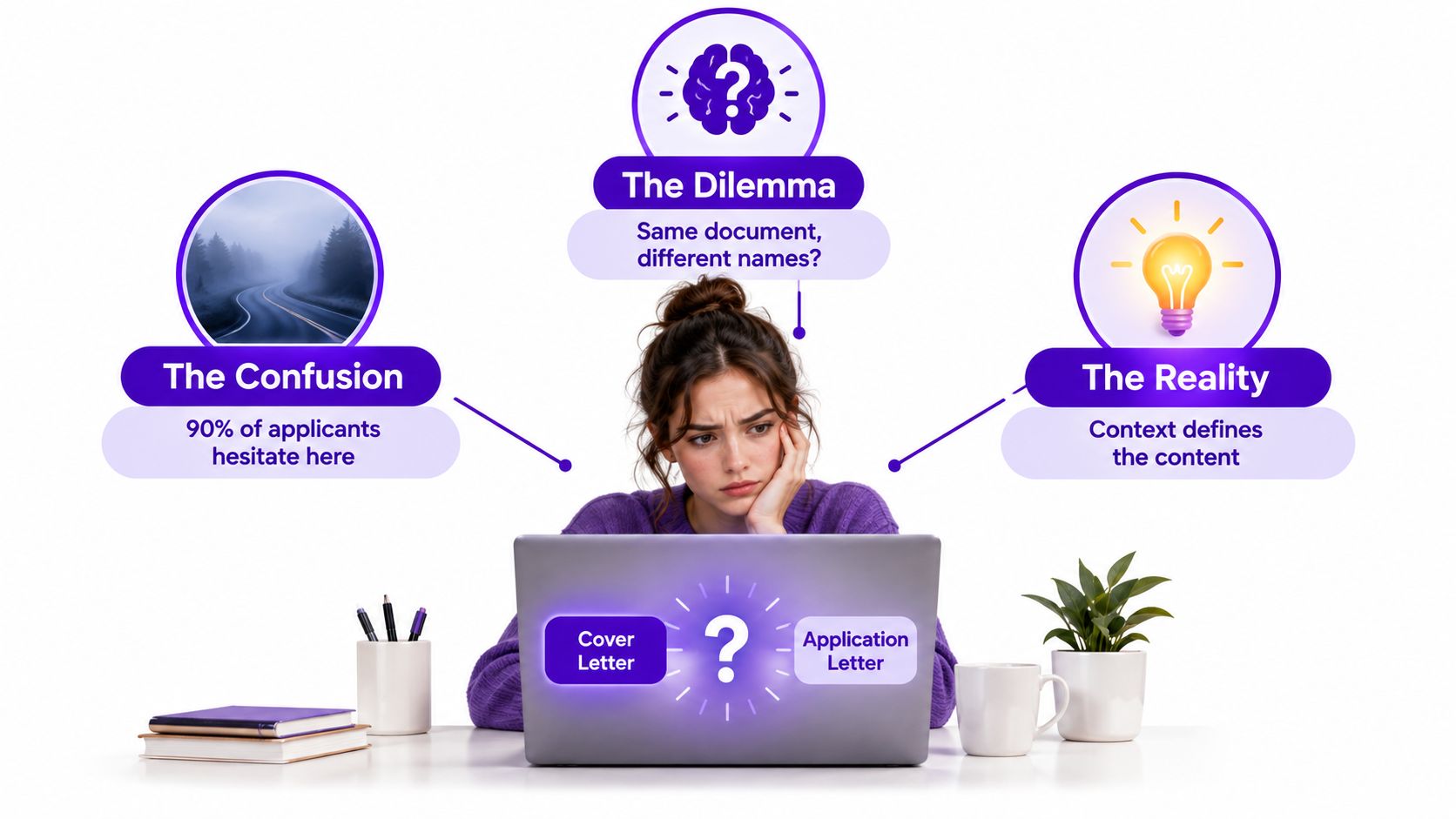
The distinction is primarily functional, not absolute. “Cover letter” appears more often in North American professional hiring, while “application letter” remains common in formal, academic, public-sector, and international settings, as described in this overview of résumé and application terminology.
The decision rule
Start with the employer's wording. If the posting asks for a cover letter, submit a concise document that adds context to your résumé. If it asks for an application letter or a statement addressing selection criteria, treat the letter as the central application narrative.
The label gives you a clue, but the instructions give you the answer. Applicant tracking systems and recruitment teams also use different labels for similar documents, so understanding how to compare staffing agency software can help recruiters manage these variations, but applicants should still follow each posting's exact requirements.
Practical rule: Don't ask only, “What is this document called?” Ask, “What information does the employer still need from me?”
What Each Document Actually Does in a Job Application
A résumé records your experience. A letter explains its relevance. That division keeps your application from becoming a repeated list of job duties.
| Dimension | Cover Letter | Application Letter |
|---|---|---|
| Primary role | Supports and interprets the résumé | Formally applies for a named position |
| Main emphasis | Motivation, fit, and selected evidence | Qualifications, experience, and motivation in fuller detail |
| Relationship to résumé | Complements it without copying it | May stand alone or provide the main narrative |
| Best response to | A standard professional job posting | A formal vacancy, academic role, public-sector process, or explicit application request |
| Employer's likely question | “Why are you a good fit for this role?” | “Why should we consider you for this position?” |
A cover letter should make the hiring manager's job easier. Instead of repeating every résumé bullet, choose the evidence that answers the posting's most important needs. If the job asks for stakeholder communication, explain one situation in which you managed stakeholders and what changed as a result. If it asks for campaign planning, connect a relevant project to the employer's goals.
An application letter can use the same evidence but give it more room. It might explain your professional path, why you're applying now, how your experience matches several requirements, and what you hope to contribute. That fuller format matters when the application process doesn't rely heavily on a conventional résumé.
What the evidence suggests
The document's name doesn't create value by itself. Adjusting the content to the role does. ResumeGo reported that applications with a customised letter produced a 53% higher callback rate than applications without one, and 87% of surveyed hiring professionals said they read cover letters. These results come from hiring research and don't guarantee an interview for every applicant, but they support a sensible conclusion: a specific letter can add useful evidence when it answers the employer's actual needs. Read the ResumeGo cover letter research for the limitations and context behind those findings.
The same principle applies whether you're applying in a large corporate system or conducting a focused tech job search without wasting time. Save the résumé for breadth. Use the letter for interpretation, motivation, and proof of fit.
For a clearer workflow, understand how applicant tracking systems work. The system may store the file under one label, while the recruiter evaluates whether it answers the posting. Your responsibility is to make that answer obvious.
How to Structure Both Letters Using the Same Four-Part Scaffold
The mechanics are remarkably similar. Both documents need a clear purpose, relevant evidence, a reason for choosing the organization, and an easy next step. The difference is how much the letter relies on the résumé.
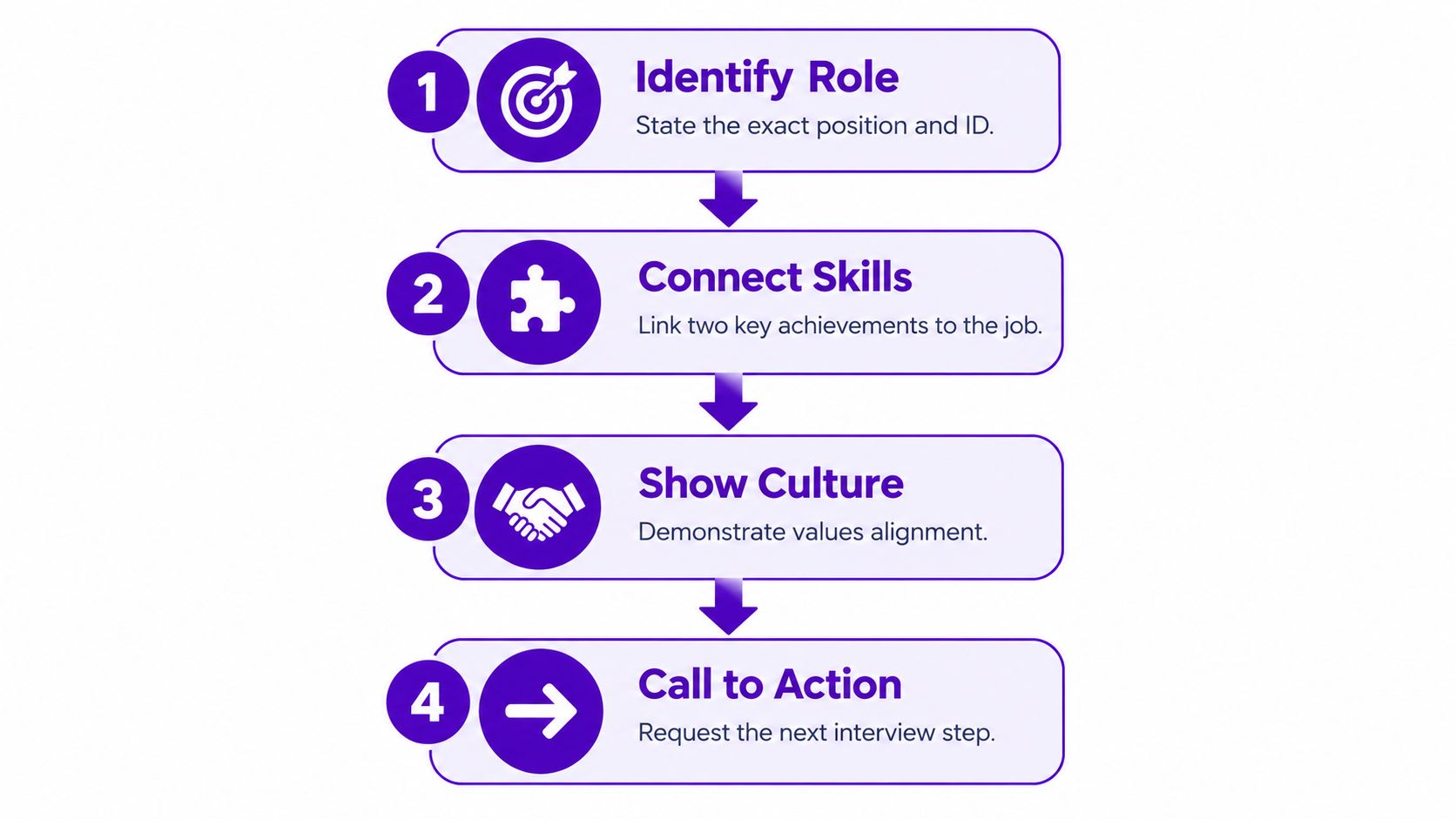
Start with the exact role
Name the position in the opening paragraph. Include a job reference number if the posting provides one. This prevents ambiguity when an organization has several vacancies and immediately shows that you're responding to a real opportunity.
A cover letter might say that you're applying for a Marketing Coordinator role and that your campaign experience matches the company's focus on customer acquisition. An application letter can use the same opening, then continue with a more complete statement of candidacy.
Connect evidence to requirements
Choose two or three achievements that address the most important requirements. Don't list every skill you have. Explain what you did, which capability it demonstrates, and why that capability matters here.
Use quantified achievements when you have accurate figures. If you don't, describe the outcome precisely without inventing a number. “I reorganized the intake process so colleagues could find requests more easily” is stronger than “I'm highly organized.”
The cover letter should complement rather than repeat the résumé. An application letter may need to become the central narrative when no résumé format or standardized form dominates, as explained in this career guidance on cover letters.
Explain organization-specific motivation
Avoid praise that could apply to any employer. Mention a product, service, mission, customer group, or working method that connects to your experience. Then explain what you can contribute, rather than focusing only on what you hope to receive.
Close with a clear action
Ask for the next step directly and politely. You can express interest in discussing your fit in an interview and thank the reader for considering your application. Before sending, use a practical cover letter best-practices checklist to check names, role titles, evidence, and tone.
Two Sample Letters Responding to One Job Posting
Suppose a mid-size software company is hiring a Marketing Coordinator. The posting asks for campaign coordination, cross-team communication, customer-focused writing, and basic performance reporting. The candidate's résumé shows experience coordinating email campaigns, working with sales, and preparing reports.
Cover letter version
Dear Hiring Manager,
I'm applying for the Marketing Coordinator position at Northstar Software. My experience coordinating email campaigns and working with sales teams matches your need for organized, customer-focused marketing support.
In my current role, I coordinate campaign assets across marketing and sales, keep deadlines visible, and prepare performance summaries for internal reviews. I've also rewritten customer-facing email content to make product information easier to understand. These experiences would help me support Northstar's campaigns while keeping communication consistent across teams.
I'm interested in Northstar because your product helps growing businesses manage complex workflows with less friction. I'd welcome the opportunity to discuss how my campaign coordination and reporting experience could support your marketing team.
Sincerely,
Jordan Lee
This version assumes the résumé contains the full employment history, tools, education, and project detail. The letter selects a few pieces and translates them into the employer's language.
Application letter version
Dear Hiring Manager,
I'm writing to formally apply for the Marketing Coordinator position at Northstar Software. My background in campaign coordination, customer-facing writing, and cross-functional communication has prepared me to support the responsibilities described in your posting.
In my current position, I coordinate email campaigns from planning through review. I gather input from marketing and sales, organize assets, monitor deadlines, and prepare performance summaries for internal discussions. This work has taught me to manage details without losing sight of the customer and the campaign's purpose.
I've also contributed to customer-facing content by rewriting product messages for clarity. I work closely with colleagues to understand what customers need to know, then turn that information into accessible copy. That experience connects directly with your requirement for clear, customer-focused communication.
Northstar's focus on simplifying business workflows appeals to me because I enjoy helping teams make complicated information easier to use. I'd value the opportunity to bring my coordination skills, careful writing, and collaborative approach to your marketing group.
Thank you for considering my application. I'd welcome an interview to discuss how my experience could contribute to Northstar Software.
Sincerely,
Jordan Lee
The second version repeats more context because the letter itself performs more of the application's explanatory work. Use the Eztrackr job cover letter generator as a drafting aid if you need a starting point, then replace generic language with your own verified evidence.
How Regional Hiring Culture Changes the Document
The same applicant may need three different versions of a letter, even when the underlying experience stays the same.
In a North American private-sector application, the employer will usually expect a cover letter beside the résumé. The letter should be concise, role-specific, and focused on the strongest evidence of professional fit. The résumé remains the detailed record.
An Australian employer may call the document a cover letter or a letter of motivation. SEEK describes the letter as a way to add context, motivation, and role-specific evidence beyond the résumé, so the candidate should follow the posting's wording while preserving that practical purpose. In SEEK's research, 83% of Australian hirers found cover letters useful, although usefulness varies by role, industry, company culture, and hiring process. The regional terminology is a signal, not a reason to submit a generic personal essay.
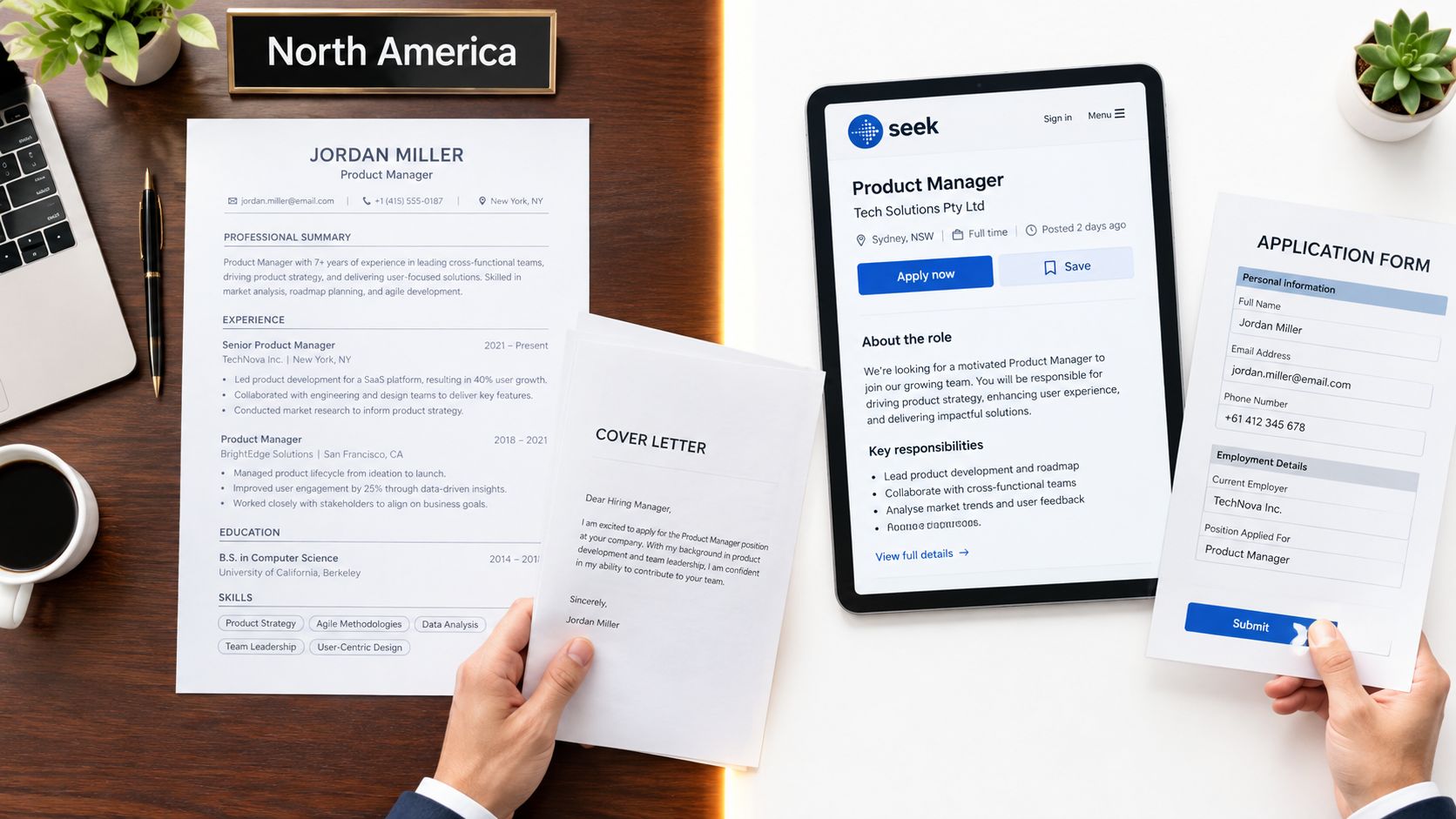
Public-sector and academic applications often require a more formal response. If the employer provides selection criteria, address each criterion explicitly and attach evidence to it. Don't bury the response inside a broad story about your career. Use clear labels or paragraphs that make it easy for the evaluator to locate the proof.
Read the prompt, not just the title
A portal field called “cover letter” may expect a formal application statement. Conversely, an “application letter” field may accept a brief letter that accompanies a résumé. Look for instructions about criteria, word limits, required attachments, or questions that the letter must answer.
The safest approach: Follow the employer's label, then let the instructions determine the content.
When a Letter Helps and When It Hurts
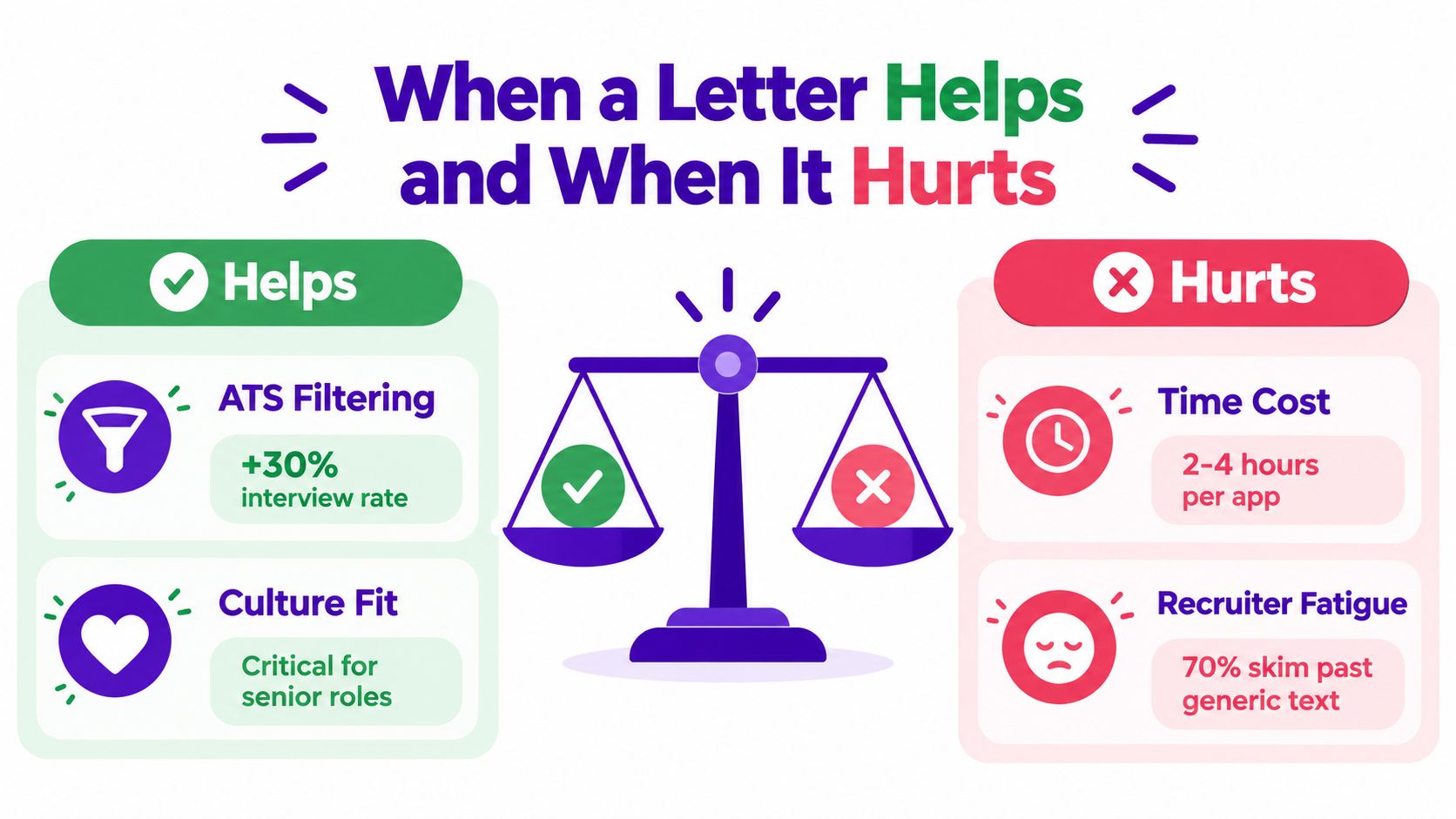
A letter can strengthen an application, but writing one automatically isn't always the best use of your time. Its value depends on whether the employer will read it and whether you have something useful to add.
A 2025 LinkedIn survey summarized by SEEK found that 29% of hiring managers rarely read cover letters, while a separate survey of 625 U.S. hiring managers reported that 94% considered cover letters influential in interview decisions and 49% said a strong letter could secure an interview. These results come from different surveys and should not be treated as a universal prediction. They show why blanket advice fails: some hiring teams treat the letter as meaningful evidence, while others give the résumé priority. The findings are summarized in this discussion of whether a cover letter is necessary.
Write one when the document can answer an important question
Prioritize a customized letter when:
- The posting requests it: Treat a required document as part of the assessment, not an optional extra.
- Your motivation needs explanation: A career change, employment gap, relocation, or unusual transition may make more sense in a short narrative.
- The role depends on communication: Writing quality, judgment, persuasion, and stakeholder awareness are easier to demonstrate through focused prose.
- Your transferable skills need translation: If your previous industry differs from the new one, explain how your experience solves the employer's problem.
- A referral creates context: Mention the relevant connection or conversation without turning the letter into a name-dropping exercise.
Skip or shorten it when it adds friction without evidence
A letter may be lower priority when the process is high-volume, automated, or provides no meaningful place to submit one. Don't upload a recycled document just to satisfy the feeling that every application needs an attachment. A generic letter can make your application look less considered than a strong résumé and accurate answers.
A short, specific letter is more useful than a long document that repeats your résumé.
A One-Minute Decision Checklist
Use this checklist at the application portal before you upload anything:
- Read the label. Does the employer request a cover letter, application letter, motivation letter, or selection-criteria response?
- Read the instructions. Look for required topics, attachments, reference numbers, or formatting directions.
- Identify the letter's role. Should it support your résumé, or must it provide the main account of your qualifications?
- Choose the center of gravity. Lead with role fit for a cover letter. Give qualifications, experience, and motivation more space when the application letter must stand alone.
- Select two or three proof points. Match real achievements to the posting's most important requirements.
- Add employer-specific motivation. Explain why this organization and this role make sense for you.
- Check the closing. Name the next step you'd welcome, usually a conversation or interview.
- Remove repetition. If a sentence only copies a résumé bullet, replace it with interpretation or evidence of relevance.
If the instructions are unclear, submit the document that best follows the employer's requested format and make its purpose obvious in the opening paragraph.
Track What Actually Works for You Over Time
The most useful question isn't whether a cover letter is universally better than an application letter. It's which document works for you, in which hiring context, and for which roles.
Create a simple record for every application. Note the employer's label, whether the letter was required or optional, which version you submitted, the region and role type, and what happened afterward. Record outcomes consistently, such as no response, screening contact, interview, or offer.
After enough applications, your own pattern becomes more useful than general advice. You may find that formal application letters matter in public-sector competitions, while concise cover letters work better for private-sector roles. You may also discover that a particular type of evidence, such as a career-change explanation or a project outcome, generates more useful responses than broad statements about enthusiasm.
Document control matters as your search grows. A guide to document version management can help you keep the right letter connected to the right résumé and vacancy. Eztrackr lets job seekers save postings, link documents to applications, track submission status, and review application statistics, so you can compare letter choices with your own pipeline instead of relying on assumptions.
The terminology may change across countries and employers. Your process shouldn't. Read the prompt, select the right center of gravity, tailor the evidence, and track the result.
Use Eztrackr to save each job posting, connect the correct résumé and letter, and track whether a cover letter or application letter leads to meaningful progress. Start organizing your applications today so your next decision is based on your own response data, not guesswork.